

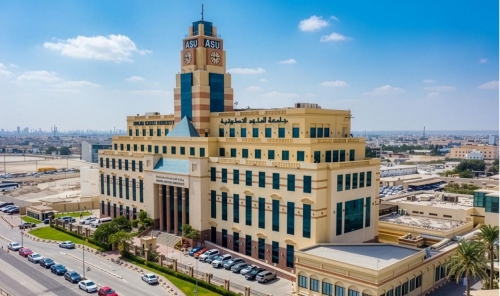
Applied Science University Aligns Engineering Education with Bahrain’s BIM Transformation
Applied Science University Aligns Engineering Education with Bahrain’s BIM Transformation, Preparing Engineers for the Future of Smart Construction
As the Kingdom of Bahrain advances the adoption of Building Information Modelling (BIM) and digital technologies across the construction, design and infrastructure sectors, Applied Science University (ASU) continues to prepare its Architectural and Civil Engineering students for this evolving professional landscape through programmes that integrate digital engineering, sustainability and modern industry practices.
Bahrain is taking significant steps towards the wider adoption of three-dimensional Building Information Modelling (3D BIM) across its construction, design and infrastructure sectors. This national direction is increasingly linked with the use of artificial intelligence to support smarter project planning, simulation and lifecycle management, identify potential design clashes before construction, optimise the use of resources, reduce costs and contribute to more sustainable infrastructure development.
Against this backdrop, ASU’s Architectural and Civil Engineering programmes are particularly relevant to the future needs of Bahrain’s engineering and construction sectors. Students are introduced to Building Information Modelling (BIM) and modern digital engineering tools as part of their studies, enabling them to develop skills that are becoming increasingly important in digitally enabled construction and infrastructure environments.
The programmes are offered through ASU’s academic partnership with London South Bank University (LSBU), UK, providing students with an internationally oriented educational experience and the opportunity to graduate with two degrees, one from Applied Science University and another from London South Bank University. This strengthens graduates’ professional profiles and enhances their competitiveness in Bahrain, the GCC and international employment markets.
The Architectural Engineering programme covers areas including building design, environmental and sustainable design, structural engineering and construction project management. Students also gain BIM skills digitally required for planning, designing and managing built-environment projects.
Through BIM, students can better understand the coordination of architectural, structural and other engineering elements within an integrated digital environment, helping improve design coordination, project implementation, operational efficiency and the long-term sustainability of buildings.
Sustainability is also embedded within the learning experience. Students explore energy efficiency, renewable energy, responsible resource consumption, water reuse and the conservation of natural resources. These principles are reflected in student design work and graduation projects, where learners are encouraged to develop practical solutions for more sustainable buildings and communities.
The Civil Engineering programme, meanwhile, prepares students for the design, construction and maintenance of essential infrastructure, including roads, bridges, water networks and construction projects.
Students are also exposed to applications related to stormwater management and drainage design, together with the use of Geographic Information Systems (GIS) to analyse water-flow routes, identify areas susceptible to water accumulation and support data-driven approaches to water management and sustainable infrastructure planning.
The educational experience therefore extends beyond conventional engineering theory. Students engage with technologies, digital tools, design projects and practical applications that help them understand how the engineering profession itself is changing.
Both programmes also benefit from strong professional recognition, being the first Architectural and Civil Engineering programmes in the Kingdom of Bahrain to receive accreditation from the Chartered Institute of Building (CIOB), one of the world’s leading professional bodies for construction, built-environment and project-management professionals.
The combination of BIM, sustainability, digital design, applied engineering, international academic partnership and professional accreditation gives ASU students a strong platform for careers in a construction and infrastructure sector undergoing rapid technological transformation.
To further support students wishing to join these programmes, Applied Science University offers additional partial scholarships ranging from 25% to 35%, depending on the student’s secondary-school academic performance.
At ASU, engineering students are therefore not only studying how buildings and infrastructure are designed today; they are developing the knowledge and digital skills needed to contribute to the buildings, infrastructure and smart cities of tomorrow, using technologies that Bahrain itself is increasingly adopting across its construction and infrastructure sectors.
Related Posts