

Importers Switch Routes as Freight Costs Rise
TDT | Manama
Email: mail@newsofbahrain.com
Goods kept reaching Bahrain as importers switched routes and sent shipments on longer journeys by road during trouble on key sea lanes, but the detours drove up freight bills, stretched delivery times and left smaller firms facing costs they were less able to absorb.
Lawmakers are calling for the routes and emergency measures that worked during the disruption kept ready for the next shipping shock. They are calling for goods to be bought from a wider range of countries and suppliers, larger strategic stocks and land, air and sea routes that can take over when a main shipping lane is hit.
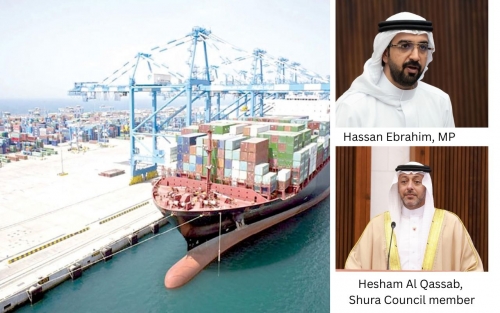
MP Hassan Ebrahim, a member of Parliament’s Foreign Affairs, Defence and National Security Committee, said ports, hauliers, logistics firms, government bodies and businesses worked together to keep food and other essential goods flowing into the kingdom.
‘Our ports, transport network and logistics sector worked together, alongside government bodies and businesses, to keep essential goods flowing into Bahrain,’ he said.
Trouble along major sea lanes, he said, put Bahrain’s supply lines to the test and showed how quickly trade can be thrown off when ships are delayed or forced to change course.
Bahrain was able to draw on its ports, logistics network and road link with Saudi Arabia, while Gulf co-operation gave traders other ways to bring goods in.
But keeping shelves supplied came at a price.
Ebrahim said small and medium-sized importers could be hit hardest when cargo was held up or freight bills rose. Unlike large companies, many have less room to absorb sudden costs or keep extra goods in storage.
Hesham Al Qassab, a member of the Shura Council’s Financial and Economic Affairs Committee, said the answer did not necessarily lie in writing new laws.
Instead, existing laws, rules and procedures should be tested to see how well they work during a crisis and what needs to change in the way they are applied, he said.
He pointed to Law No. 10 of 2022 issuing the Maritime Law, which covers shipping, ports, the movement of cargo, international maritime transport and port security.
‘What we have seen in the Strait of Hormuz and Bab Al Mandab shows why we need to buy goods from a wider range of suppliers, build up strategic stocks and keep alternative land, air and sea routes ready for use when they are needed,’ Al Qassab said.
He said Bahrain should know before a crisis how much stock is available, where else goods can be bought, how much extra traffic its ports can handle and how quickly shipments can be sent by another route.
Al Qassab also called for closer work between ports, customs, trade bodies, those responsible for food supplies and businesses so decisions can be made quickly when shipments are delayed.
Gulf states should work more closely on supply routes as well, he said, giving importers several ways to move food, raw materials and other essential goods when one route is disrupted.
Small and medium-sized firms also need help when the cost of bringing goods into the country suddenly jumps, he said.
Al Qassab called for faster customs clearance, simpler emergency procedures and earlier information on alternative routes, alongside short-term finance or guarantees for importers facing sudden rises in freight costs.
Related Posts