

Parents Warned Over Teen Knife Carrying
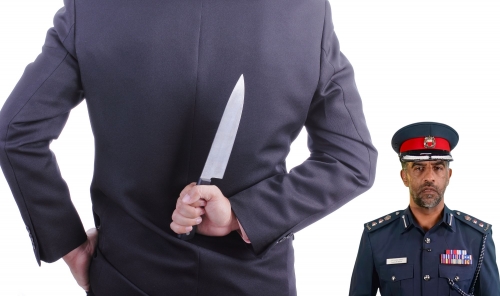
A knife or stick found in a teenager’s pocket, drawer or car should be taken away at once, the head of Hidd Police Station warned, saying one burst of anger could end with a young person in prison and a family’s hopes wrecked.
Colonel Dr Osama Bahar urged parents to act when they find knives, sticks or other sharp objects among their children’s belongings and to reject claims that they are being kept ‘just in case’ or for self-defence.
He said the problem could not be called widespread in Bahrain, where people had long lived in peace, but warned that a single case could bring grave harm to a family and the community.
‘What does it mean to you, as a father, a mother or anyone in the family, when you see a stick, a knife or any sharp object in your son’s car, in a drawer, in his pocket or in his hand, and you stay silent?’ he said.
‘What does it mean to us when you see these things and still fail to take the right action?’
Colonel Dr Bahar said parents must neither encourage children to carry such items nor soften what they are by calling them something else.
‘Do not say, “Keep it as a precaution. You might need it one day to defend yourself,”’ he said.
‘Bahrain is safe, and God willing it will remain safe. So why would you allow a teenager or a child to have these things?’
He warned that no parent could know how a teenager would react in anger, particularly during a fight involving other young people.
‘Can you guarantee what his reaction will be when he loses his temper?’ he said. ‘Can you guarantee that he will not ruin his future through teenage recklessness, or use these things in a fight when someone else is carrying a sharp object?’
Colonel Dr Bahar said some parents wrongly taught children to be ready for fights and saw physical force as a virtue.
Some, he said, excused knives, sticks or other dangerous items by telling their children, ‘You never know. One day you might need it.’
‘The father does not realise that the day his son uses that stick, knife or sharp object, everything the family has put into that boy could be lost,’ he said. ‘You could end up visiting him in prison.’
Parents, teachers and other adults have a duty to take such items away and challenge the ideas that lead young people towards fights, he said.
‘You have to take these things out of his hand and take the thought of fighting and violence out of his head,’ Colonel Dr Bahar said.
He warned against dressing violence up as ‘strength’, ‘reputation’ or ordinary teenage behaviour.
Colonel Dr Bahar stressed that such conduct was not a mark of Bahraini society.
‘Bahraini society has been peaceful for generations,’ he said. ‘People love calm, safety and peace. But one case like this can hurt the whole community.’
He called on parents, uncles, other relatives, teachers and anyone who saw such behaviour to step in.
‘If you see it in his hand, hidden in his car or anywhere else, take it away from him,’ he said. ‘And take out of his mind any thought of using it for violence against others.’
Related Posts