

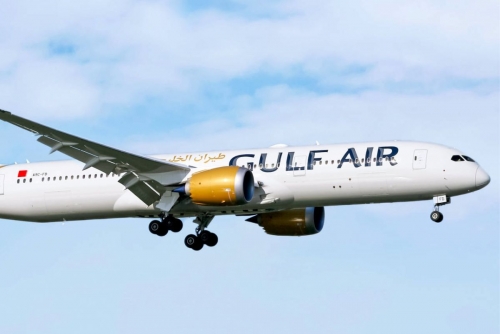
Gulf airlines operating at half capacity as recovery continues
Email: online@newsofbahrain.com
ABU DHABI: Gulf airlines are currently operating at approximately half of their pre-crisis capacity as the industry continues a slow recovery from global energy disruptions and regional airspace closures. Industry data revealed that major carriers in the region have adjusted their flight schedules significantly to cope with a 50% reduction in available seat kilometers compared to 2024 levels.
The capacity crunch is primarily driven by the ongoing jet fuel shortage and the closure of key transit corridors, which have forced airlines to prioritize high-demand routes while suspending secondary destinations. Carriers such as Emirates, Qatar Airways, and Etihad are reportedly focusing their limited fuel supplies on ‘ultra-long-haul’ connectivity, linking major global hubs, while regional short-haul services have seen the deepest cuts.
Despite the reduced capacity, demand for international travel remains high, leading to record-high ‘load factors’ , a measure of how many seats are filled on each flight. This imbalance between limited supply and high passenger demand has resulted in average airfares rising by more than 40% over the last quarter.
Aviation analysts suggest that while the ‘half-capacity’ model is a survival strategy for the current fuel crisis, it poses long-term risks to the region’s status as a global transit hub.
To mitigate this, airlines are accelerating the retirement of older, fuel-inefficient aircraft and are increasingly deploying the latest generation of twin-engine planes, such as the Boeing 787 and Airbus A350, which offer better fuel economics under the current market constraints.
Related Posts