

A Fruitful Idea!
TDT | Manama
Email: mail@newsofbahrain.com
“Where are you?”
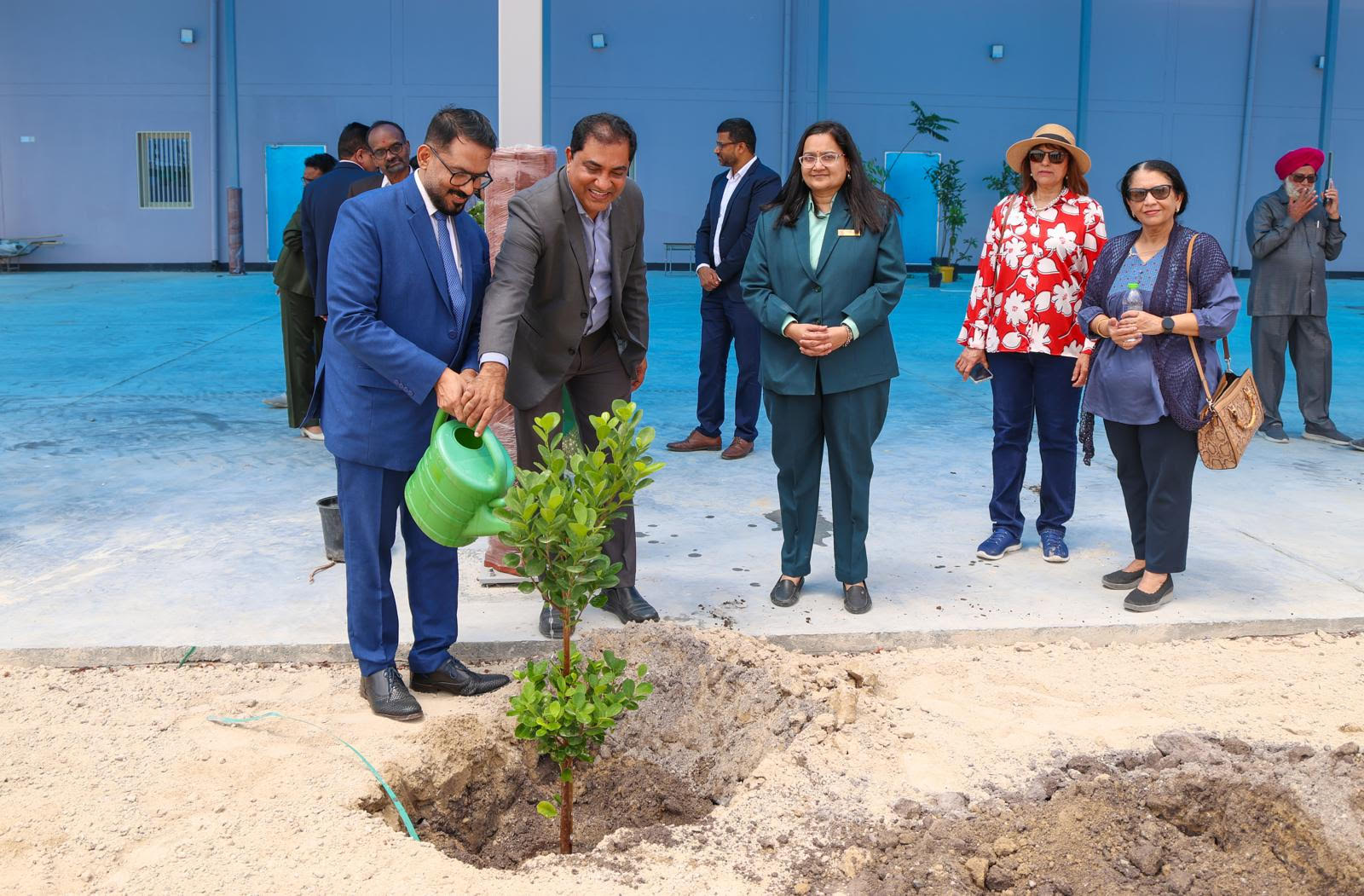
“At the New Horizon School… planting trees.”
“You’re planting trees?”
There was a pause. Then laughter.
My wife’s reaction was fair.
I nodded with full seriousness. Yes, finally—after years of writing articles, giving speeches, and forwarding WhatsApp messages about “Save Trees,” I have officially upgraded… to actually touching soil. For me, this is a historic moment worth preserving.
Now, to be fair, my wife has been doing this for years. Weekends? Garden shows. Backyard? A mini agriculture department. I think even the soil listens to her.
Me? I love greenery… as long as someone else grows it. I always believed my role in life was to motivate and inspire.
But being on that campus raised a simple question: Why can’t we make gardens at every school? A few schools have already started such an initiative under the Green School Project.
Imagine if every school had its own garden—vegetables, fruits, or even a handful of trees. Take any campus and picture ten mango trees. Shade, fruit, and a quiet lesson in sustainability—all in one. Probably fewer students bunking classes, too.
If space is a constraint, there are alternatives. Why not allocate land to students interested in farming through the Ministry of Agriculture? Let them cultivate, harvest, and even sell their produce. As the tree grows, the student can place a name marker—leaving a lasting signature of their contribution for years to come.
The proceeds could support scholarships or assist students in need. It would be education funding itself, rooted—quite literally—in the ground.” My Environmentally Friendly School” competition, which focuses on conserving electricity and water, caring for school gardens and implementing recycling programs, could transform not just campuses, but mindsets.
My son has been making a more strategic version of this argument for years. His advice is clear: buy land, secure water access, and think long-term. According to him, the future belongs not to those who control technology, but to those who can produce food. It sounds dramatic, but in a world already discussing food security, perhaps not entirely unrealistic.
Globally, environmental responsibility is no longer optional. ESG compliance is becoming a benchmark rather than a buzzword. The message is clear: the conversation has to move from awareness to action.
As I was leaving the school, a member of the management team handed me a plant as a token. I carried it home with quiet pride and presented it to my wife.
“This is a money plant,” I said confidently.
She examined it briefly and replied, with scientific precision,
“This is Epipremnum aureum.”
The debate that followed lasted exactly two minutes. The conclusion was predictable.
In an attempt to regain some ground, I suggested a new rule:
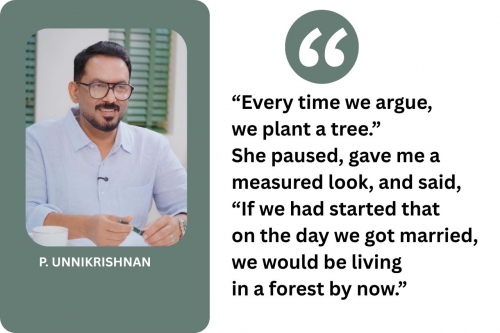
“Every time we argue, we plant a tree.”
She paused, gave me a measured look, and said,
“If we had started that on the day we got married, we would be living in a forest by now.”
From behind the door, I could see my daughter… silently laughing.
(P. Unnikrishnan is the Chairperson & Managing Director of The Daily Tribune)
Related Posts