


Global air travel rises modestly as Middle East disruptions weigh on demand
Global passenger demand for air travel recorded a modest increase in March 2026, though sharp regional disparities—particularly a steep decline in the Middle East—limited overall growth, according to the International Air Transport Association.
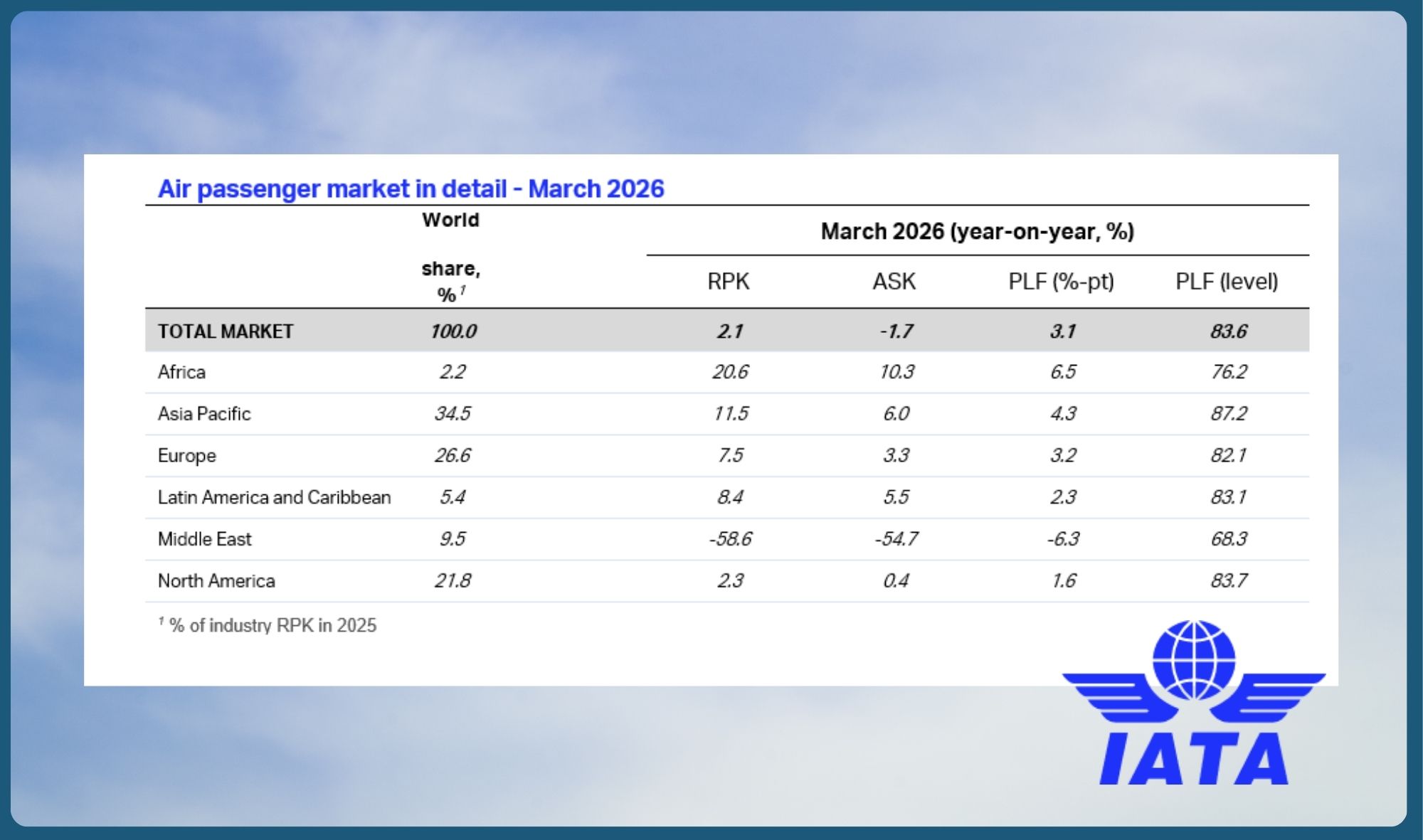
Industry data showed total demand, measured in revenue passenger kilometres (RPK), rose by 2.1% compared to March 2025. At the same time, airline capacity declined by 1.7%, pushing the global load factor up to 83.6%, an increase of 3.1 percentage points year-on-year.
International travel, however, saw a slight contraction of 0.6%—the first decline since 2021—largely driven by a sharp 60.8% drop in traffic among Middle Eastern carriers. Capacity in the international segment fell by 6.2%, although load factors improved to 84.1%.
In contrast, domestic markets remained strong, with demand rising 6.5% and capacity increasing 5.6%, reflecting continued resilience in internal travel across major economies.
Willie Walsh said the Middle East situation had a significant impact on global figures, noting that demand outside the region grew by around 8%. He added that ongoing concerns over jet fuel supply and rising costs could pose further challenges for the industry in the months ahead.
The disruption is closely linked to regional instability, which has led to airspace restrictions and operational challenges for airlines in the Middle East.
Regional performance shows mixed trends
Airlines in the Asia-Pacific region recorded an 11.5% increase in international demand, supported by strong seasonal travel linked to the Lunar New Year and expanding global routes.
European carriers reported a 7.7% rise in demand, with traffic between Europe and Asia surging by over 29% as airlines adjusted routes to bypass affected Middle Eastern airspace.
North American airlines posted a 3.7% increase, driven by steady transatlantic travel and improving connections with Asia.
Meanwhile, Middle Eastern carriers experienced the most significant downturn, with demand plunging by more than 60% and load factors dropping to 67.8%, reflecting the impact of ongoing regional conflict and airspace closures.
Elsewhere, Latin American airlines saw demand grow by 12.1%, while African carriers recorded a 19.2% increase, highlighting strong recovery and expansion in emerging markets.
Fuel concerns and outlook
Industry leaders warned that jet fuel supply constraints—particularly in regions reliant on Gulf exports—could create shortages and drive up ticket prices. While demand has not yet been significantly affected, airlines are closely monitoring whether higher costs will begin to influence passenger behaviour.
Despite these challenges, early indicators suggest strong travel demand heading into the summer season. However, IATA emphasised the need for regulatory flexibility and coordinated efforts to manage capacity constraints and potential fuel shortages in an increasingly volatile operating environment.
.
Related Posts