

Words Really Matter!
The beauty of Bahrain lies in its ability to evolve. It is a nation that continuously embraces subtle yet significant change, reflecting the shifting mindset of a world constantly rethinking how societies grow, develop, and coexist. Today, beyond the rhetoric of politics, ordinary people are becoming more conscious of how they speak, how they address one another, and how language itself shapes dignity.
It was therefore heartening to see recent discussions in Parliament proposing a shift in terminology— from “housemaid” or “house servant” to “domestic worker.” Bahrain is also restructuring its penal system to replace the term “prison” with “Reform and Rehabilitation Centres”. These are not merely changes in vocabulary; they represent a deeper transformation in how we perceive roles, responsibilities, and even human worth.
Yet, even as we make these corrections, there remains room to go further.
Take, for instance, the term “blacklist.” Why do we instinctively associate negativity with the colour black? Why not simply use “blocklist”? Language carries the weight of history, and often, unconscious bias. Perhaps it is time we question not just what we say—but why we say it.
In everyday conversations, we still encounter outdated and insensitive terms. Words like “spastic” or “mentally retarded” continue to surface, despite more appropriate and respectful alternatives, such as referring to someone as a person with cerebral palsy or a person with an intellectual disability. These are not merely semantic corrections—they are about restoring dignity.
As a media organisation, it is time for us to replace Terms like “illegal immigrant” with “undocumented migrant,” and “juvenile delinquent” with “at-risk youth.” Even commonly used words like “addict” can be reframed as “a person with a substance use disorder.”
At times, we may have used “war victims” instead of “civilians affected by conflict,” or casually described situations as “clashes” when “escalation” or “exchange” would have been more accurate. On social media, we often see words like “riots” used in place of “unrest,” and “fake news” instead of the more precise “misinformation.”
I have often questioned why we label individuals as “poor,” rather than “economically disadvantaged” or “low-income.” Why refer to “slums” instead of “informal settlements”? Why speak of the “Third World” when “developing countries” more accurately reflects growth and potential? Even in education, the term “dropout” carries a stigma that “early school leaver” does not.
Then comes the question of gender in language. Words like “policeman,” “fireman,” “stewardess,” and even “mankind” are gradually giving way to more inclusive alternatives—“police officer,” “firefighter,” “flight attendant,” and “humankind.” It raises a personal question: should I continue to be called a “Chairman,” or is “Chairperson” a more appropriate reflection of the times?
Change, after all, begins at home. I have consciously moved away from terms like “master bedroom” and prefer “primary bedroom.” In the workplace, we have begun referring to “office boys” as “support staff,” and “drivers” as “professional drivers” or “chauffeurs.”
When I recently tried to bring this conversation home, inspired by all these changes, I jokingly called my wife a “generation changer.” She smiled, paused for a moment, and then asked a question that completely disarmed me: “Fine… but how do we women remove ‘men’ from ‘women’?” While I was busy searching for an answer, she added, “Don’t worry… men seem to have secured a permanent place— at least in ‘mental’!”
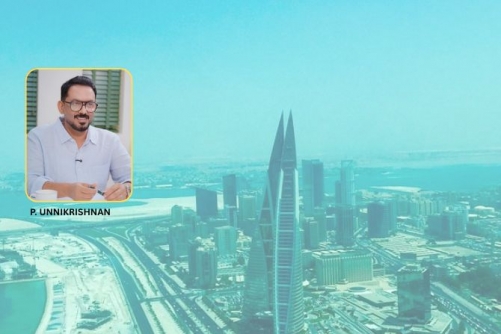
(P. Unnikrishnan is the Chairperson & Managing Director of The Daily Tribune)
Related Posts