

Bahrain Needs Summer Sustainability Strategy
TDT | Manama
Email: mail@newsofbahrain.com
The start of month of May means that Bahrain is standing at the threshold of another summer season. The nation sees scorching temperatures from mid May onwards to August when mercury usually reaches peak 40 degrees. As climate change gets worse with each passing year, the temperatures too are spiralling out of control and this translates to even harsher conditions for a predominantly hot and arid country such as Bahrain. With Bahrain’s desert topography the heat quotient is amplified as deserts warm faster and this is worsened by inadequate and erratic precipitation.
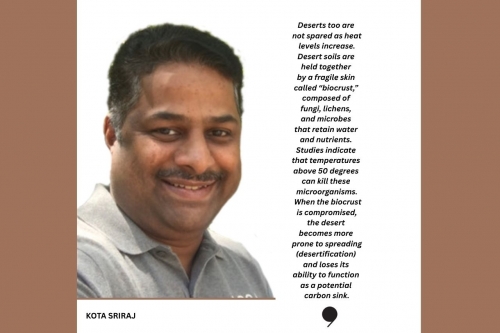
Making these conditions even worse is the rapid aridification of many geographic areas that were previously green, this has a domino effect on agriculture as rising heat inhibits microbes from converting nutrients and inhibits availability of nitrogen in the soil which reduces already sparse vegetation. Deserts too are not spared as heat levels increase. Desert soils are held together by a fragile skin called “biocrust,” composed of fungi, lichens, and microbes that retain water and nutrients. Studies indicate that temperatures above 50 degrees can kill these microorganisms. When the biocrust is compromised, the desert becomes more prone to spreading (desertification) and loses its ability to function as a potential carbon sink.
Given these conditions, it is crucial for Bahrain to leverage latest technology driven environmental innovations in order to prioritise sustainability and resource efficiency to combat heat effectively. As a part of this strategy Bahrain can adopt various measures to meet the rising temperatures head on. For instance, regenerative agriculture & biocrust restoration initiative can include planting of drought-resistant trees and help protect erosion of biocrusts which in turn can improves water retention, stabilize soil, and increases carbon sequestration. Additionally, atmospheric water generation strategy can help wherein technologies are deployed to generate potable water from humidity, specifically in coastal areas.
Similarly, the nation can also explore using seawater for evaporative cooling & humidification inside greenhouses on a large scale. This can help enable crops to beat arid conditions and while producing fresh water as a byproduct. In addition to these measures, agri-productivity can be accelerated by applying artificial intelligence led technology in drip irrigation whereby an algorithm accounts for dynamic soil moisture and triggers water flows. This ensures frugal usage of water for maximum crop productivity. This when combined with satellite data guided ground water aquifers replenishment strategy can pay remarkable dividends in the fight against climate change and sustainably manage summer temperatures.
Innovative heat management strategies can help Bahrain stay ahead of the curve and tackle summer season effectively.
(The views and opinions expressed in this article are those of the author and do not necessarily reflect the official policy or position of the Daily Tribune)
Related Posts