

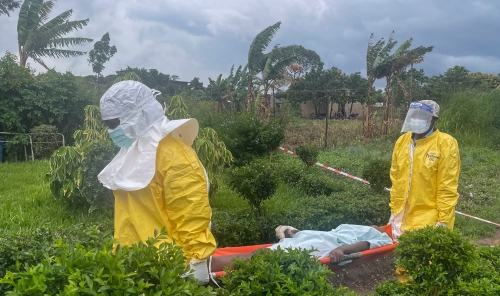
A RACE AGAINST A VIRUS WITH NO CURE
- Bahrain among first Gulf states to act as Ebola alert spreads
- DRC and Uganda are at the centre of a fast-moving outbreak
- "The Scale and Speed Demanded Urgent Action"
The World Health Organization (WHO) Director-General Tedros Adhanom Ghebreyesus declared a Public Health Emergency of International Concern—making this the first time in history a WHO Director-General declared a PHEIC before even convening an Emergency Committee. He acted after consulting the Ministers of Health of the DRC and Uganda, concluding that the situation was too urgent to wait.
The Committee met again on May 22, issuing formal temporary recommendations to all member states. It assessed the risk as "Very High" for the DRC and "High" for Uganda.
The Committee confirmed the outbreak is a global health emergency—but stopped short of calling it a pandemic. "WHO assesses the risk as high at the national and regional levels, and low at the global level," Tedros said.
To mobilise the response, Tedros approved an additional $3.4 million from the WHO Contingency Fund for Emergencies, bringing the total committed to $3.9 million.
What Is Ebola — And Why This Strain Is Different
Ebola is one of the deadliest viruses known to humanity. It spreads through direct contact with blood or bodily fluids, causes severe bleeding and organ failure, and kills roughly half of those infected—with fatality rates ranging from 25% to 90% in past outbreaks. It has claimed more than 15,000 lives across Africa since 1976.
The current outbreak is driven by the Bundibugyo strain—a rarer variety of the virus. The critical difference: no vaccine or treatment exists for this strain. A vaccine named Ervebo, manufactured by Merck, works against the more common Zaire strain and has shown some protection against Bundibugyo in animal studies—but it is not approved for human use against this strain. Containment is the only weapon health workers have.
How It Started
In early May, a hospital in Bunia Health Zone in northeastern DRC identified a cluster of severe illnesses among healthcare workers. Initial samples tested negative for Ebola. By May 15, however, eight out of thirteen samples came back positive.
Experts believe the virus had actually been circulating for months before detection, with the first suspected death traced back to April 20. A super-spreader event—likely at a funeral or a healthcare facility—is believed to have accelerated transmission, though investigations are ongoing.
The Numbers: Rapidly Escalating
As of May 22, the DRC Ministry of Health reports over 650 suspected cases and 160 suspected deaths. Of those, 64 are confirmed cases with six confirmed deaths—reported across Ituri and Nord-Kivu provinces, with a new confirmed case now reaching Sud-Kivu Province, marking a further geographic spread. europa
In Uganda, two confirmed cases and one death have been recorded, both linked to travel from the DRC, with no further local transmission reported.
An American aid worker who contracted the virus while caring for patients in the DRC has been transported to Germany for treatment.
Related Posts