

China Sets First Specific Emission Reduction Targets, But Goals Seen as Modest
TDT | Beijing
Email: mail@newsofbahrain.com
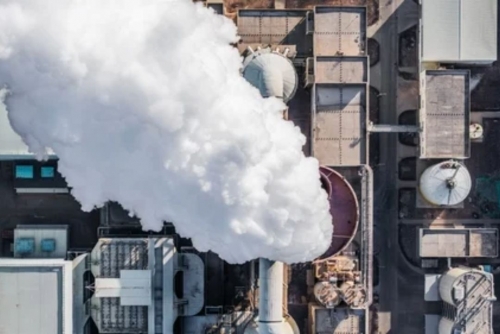
For the first time, China has outlined specific pledges to cut greenhouse gas emissions, aiming to reduce them by 7–10 percent by 2035. While analysts say the target is modest, China’s history of “under-promising and over-delivering” suggests potential for more ambitious climate action in the future.
Why It Matters
As the world’s second-largest economy and largest emitter, China is responsible for nearly 30 percent of global emissions. It is also a leader in clean energy, producing the majority of the world’s solar panels, batteries, and electric vehicles. The country’s climate trajectory will play a crucial role in determining whether global warming can be limited to 1.5°C by the end of the century.
Under the Paris Agreement, nations are required to update their “Nationally Determined Contributions” every five years. Many countries are racing to submit updated pledges ahead of the COP climate summit in Brazil this November.
China had previously pledged in 2021 to peak carbon dioxide emissions before 2030 and reach carbon neutrality by 2060, but it did not provide near-term numerical targets. The global context adds pressure, with the United States having exited the Paris Agreement under former President Donald Trump and the European Union yet to finalize new targets.
China’s New Commitments
Under the updated plan, China pledges to:
Reduce economy-wide net greenhouse gas emissions by 7–10 percent from peak levels, with efforts to exceed the target. Some analysts suggest China’s emissions may have already peaked. For comparison, to align with the 1.5°C goal, global experts say China would need to cut emissions by around 30 percent within a decade. The U.S. peaked CO2 emissions in 2007 and reduced them by roughly 14.7 percent a decade later.
Increase the share of non-fossil fuels in total energy consumption to over 30 percent and expand wind and solar capacity to more than six times 2020 levels, reaching 3,600 gigawatts.
Boost forest cover to over 24 billion cubic meters.
Make electric vehicles mainstream in new car sales.
Expand the national carbon trading scheme to high-emission sectors and work toward establishing a “climate-adaptive society.”
Analysts say while the targets may appear modest, China’s ability to exceed expectations could play a pivotal role in global climate efforts.
Related Posts