

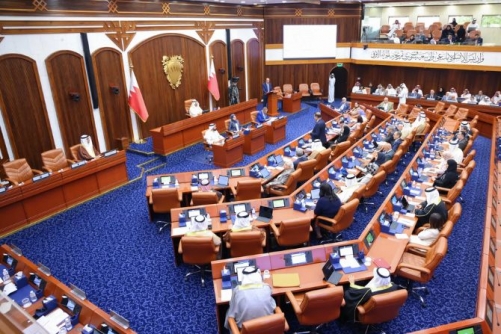
Shura Committee Recommends Rejecting Pension Amendment Bill
TDT | Manama
Email: mail@newsofbahrain.com
Bahrain’s proposed amendments to public, government, and military pension laws—aimed at increasing marriage grants for eligible female beneficiaries—have faced opposition at the Shura Council level despite initial approval in principle by the Council of Representatives.
The draft law seeks to raise the marriage grant awarded to widows, daughters, granddaughters, and sisters entitled to pensions. The proposal comes after nearly 15 years without adjustments to the grant, during which inflation and rising living costs have significantly reduced its value.
Under the proposed amendments, the marriage grant would be increased to the equivalent of 24 months of pension payments, with a minimum of BD1,000. This marks a notable rise from the current provision of 18 months’ pension, with a minimum of BD540.
Officials say the move is intended to better align with current economic conditions and support beneficiaries in managing financial responsibilities associated with marriage.
However, the General Organization for Social Insurance (GOSI), during discussions with the relevant committee, raised concerns over the financial sustainability of pension funds. The authority highlighted a widening gap between expenditures and revenues, despite recent reforms aimed at improving the system.
GOSI warned that even this relatively limited increase could negatively affect the long-term actuarial sustainability of pension funds, which are already facing deficits and unfunded future obligations.
According to estimates, the proposed increase would raise costs by 34% in the public sector and 61% in the private sector, without a clear or sustainable funding source. The average annual cost of marriage grants is currently around BD300,000 in the public sector, with similar figures in the private sector.
The authority also noted that the number of beneficiaries remains relatively small, ranging between 50 and 80 cases annually. As a result, the social impact of the amendment is considered limited when compared to the financial strain it could impose.
In light of these concerns, the Shura Council’s Services Committee has recommended rejecting the proposed amendments in principle. The committee stated that the bill conflicts with Bahrain’s recent pension reform approach, particularly reforms introduced under Decree-Law No. 21 of 2020 and subsequent amendments, which focus on strengthening financial sustainability, reducing expenditures, and ensuring the system’s ability to meet current and future obligations.
Related Posts