

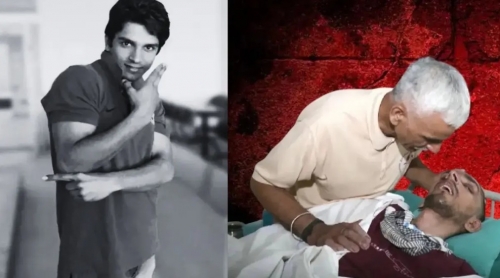
India’s first court-approved passive euthanasia: 31-year-old Harish Rana dies after life support withdrawn
email: online@newsofbahrain.com
New Delhi: Harish Rana, the first person in India to receive permission for passive euthanasia from the Supreme Court of India, has died at All India Institute of Medical Sciences in New Delhi.
Rana, 31, passed away at 4:10 pm on Tuesday, according to hospital officials. He had remained in a permanent vegetative state since 2013 following a severe brain injury.
On March 11, the Supreme Court allowed the withdrawal of life support after a petition was filed by his family. The injury had occurred in August 2013 when Rana fell from the fourth floor of a building in Chandigarh.
This marked the first time the court’s 2018 guidelines on passive euthanasia were implemented in an individual case. Three days after the ruling, Rana was shifted from his home in Ghaziabad to AIIMS in Delhi.
In its landmark 2018 judgment, a five-judge Constitution bench of the Supreme Court had recognised passive euthanasia and permitted “living wills” or advance directives. The court held that the right to life under Article 21 of the Constitution includes the right to live with dignity, extending to a dignified end of life for terminally ill patients or those in a persistent vegetative state.
Rana’s family had sought permission to withdraw life-sustaining treatment, specifically clinically assisted nutrition and hydration administered through a PEG (Percutaneous Endoscopic Gastrostomy) tube, a device used to deliver food, fluids and medication directly into the stomach.
While granting approval, the court observed that continuing treatment would only prolong Rana’s biological existence without any therapeutic benefit. It noted that both primary and secondary medical boards, along with his parents, agreed that withdrawing such support was in his best interest.
The court also stated that once medical boards certify the withdrawal of life support, judicial intervention may not always be necessary. However, given that this was the first such case before it, the bench chose to examine the matter.
It further recommended that the Union government enact comprehensive legislation governing passive euthanasia in India.
Related Posts