

EU holds crunch talks on flight delay compensation
AFP | Brussels
Email: mail@newsofbahrain.com
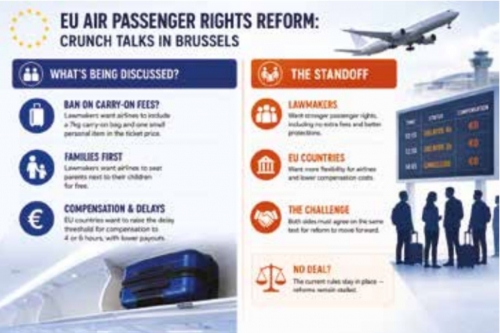
The EU was holding crunch talks yesterday on whether to ban airlines from charging for carry-on luggage -- but let them incur longer flight delays before passenger compensation kicks in.
A marathon meeting in Brussels was hoping to break an impasse over a long-planned reform of air passenger rights, with European lawmakers and member states locking horns. Discussions got underway at around 1:00 pm (1100 GMT) and are expected to run into the night.
The European Union’s 27 countries would like to trim the compensation air carriers currently have to pay out for cancelled flights and long delays -- a move opposed by lawmakers.
At present, passengers in Europe have a right to between 250 and 600 euros ($291-$699) in compensation, depending on flight distance, for delays of three hours or more.
Airlines complain that leaves them with a hefty bill and often leads them to cancel flights rather than run them with a long delay, due to knock-on effects on flight schedules.
Most EU states agreed last year to extend the threshold to four hours for flights of up to 3,500 kilometres (2,175 miles) or for any flights within the bloc, and to six hours for longer journeys. Payout amounts were also revised to between 300 and 500 euros.
The scheme came with extra carrots including a “right to be rerouted” at the earliest opportunity and a system for passengers to be automatically compensated for flights cancelled within 14 days of departure.
But that was not good enough for parliament.
Lawmakers pushed back on changes to the allowed delays -- and doubled down with additional measures broadly disliked by flight operators.
They pushed for airlines to be mandated to include a seven kilogramme carry-on luggage, as well as a small personal bag, in the price of the ticket and banned them from charging parents to get seats next to their children.
Lawmakers and governments have to agree on the same text for a reform to move forward, but months of talks have so far failed to produce a deal.
As member states initially tried to ram through the changes with rarely-used expedited procedure, the two parties have only weeks left to strike a compromise.
A no-deal would simply leave in place the current rules -- which the EU has been seeking to reform for more than a decade.
Related Posts