

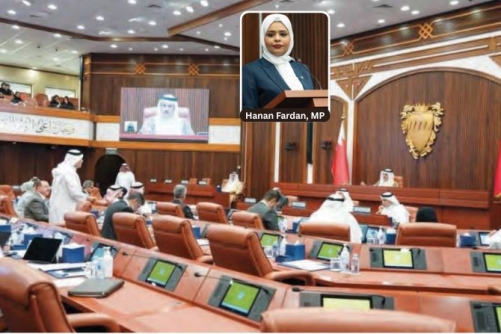
BD94 Million Support for 105,000 Workers
TDT | Manama
Email: mail@newsofbahrain.com
Bahrain’s parliament approved a government bill allowing the use of the unemployment insurance fund to pay April wages for insured Bahraini workers in the private sector, as a temporary measure to ease economic pressure caused by the regional crisis.
The amendment adds a new clause to Article 8(c) of the unemployment insurance law, permitting salaries to be paid from the fund’s surplus for one month, within existing legal safeguards and up to each worker’s insured wage.
Parliamentary estimates suggest that over 105,000 Bahrainis working in the private sector could benefit, with the total monthly wage bill reaching around BD94 million.
Lawmakers largely supported the move, describing it as necessary to help companies facing cash flow challenges meet salary obligations and avoid layoffs.
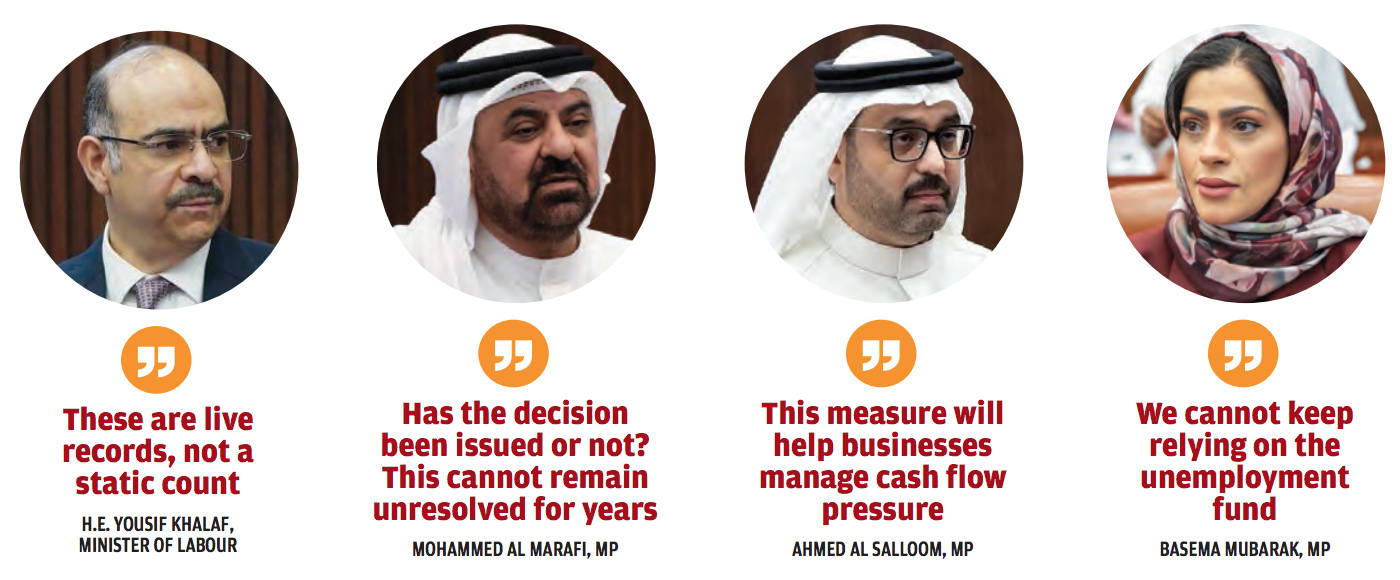
MP Ahmed Al Salloom said the measure would ease pressure on businesses, particularly small and medium-sized enterprises, while protecting workers’ incomes.
However, concerns were raised about how the support would be distributed. MP Basema Mubarak questioned the lack of clear criteria for defining affected companies and warned against repeatedly relying on the unemployment fund without a long-term solution.
Officials said the fund holds approximately BD600 million in assets, with the expected cost of covering April wages estimated between BD80 million and BD100 million.
The law will take effect after its publication in the Official Gazette.
Loan Payment Freeze
Without Fees An urgent proposal to delay citizens’ loan and debt instalments without extra interest or fees was approved by Parliament. with MPs urging the government to act in coordination with the Central Bank of Bahrain during what they described as an exceptional period.
The proposal asks the government to take the necessary steps to postpone repayments due from citizens for the time being, in light of the security and economic effects linked to recent regional tensions.
MPs behind the measure said the aim was to ease the strain on households hit by a slowdown in economic activity and pressure on incomes.
They said a temporary pause in repayments would help citizens keep more cash on hand, support spending and help the market remain steady.
According to the explanatory note, the move would also ease the social burden on families by reducing the risk of financial distress, default and the legal and personal trouble that may follow.
The note said delaying instalments without extra charges would also help protect banking stability by limiting the risk of widespread missed payments and giving borrowers time to rearrange their obligations in an orderly way, while allowing lending activity to continue.
It added that the exceptional circumstances justified temporary state action to protect borrowers and support economic and social stability as part of the wider public interest.
The proposal was submitted by MPs Hanan Fardan, Basema Mubarak, Lulwa Al Rumaihi, Hassan Bukhammas and Hisham Al Ashiri.
Minister Defends Job Data and Disability Hiring Role
Yousif Khalaf, Labour Minister defended ministry’s unemployment data and role in hiring people with disabilities during a parliamentary session on Tuesday, responding to questions from MPs Abdulhakim Al Sheno and Mohammed Al Marafi.
Khalaf said fluctuations in jobseeker numbers reflect a “dynamic labour market,” not inconsistencies in official records.
He noted that the Ministry of Labour initially recorded 17,831 jobseekers when implementing a directive issued on 28 September 2025 by the Crown Prince and Prime Minister, His Royal Highness Salman bin Hamad Al Khalifa, to provide three job opportunities per registered individual.
Since then, 4,746 people have been employed, though overall figures have not dropped proportionally due to new registrations.
“These are live records, not a static count,” Khalaf said. Addressing criticism over disability employment, Khalaf clarified that most responsibilities under the relevant law fall to the Ministry of Social Development.
He said that his ministry’s role is limited to issuing decisions—subject to Cabinet approval—on government roles where people with disabilities are prioritised.
He added that a list of public sector jobs suitable for people with disabilities has already been prepared in coordination with relevant authorities and is being implemented.
Khalaf also rejected claims of weak enforcement against non-compliant companies, stating that legal authority to record violations and refer cases lies with the Ministry of Social Development, not the Labour Ministry.
However, MP Al Marafi criticised the ministry’s response, questioning why a key ministerial decision under the law has not been formally issued since 2006.
He also raised concerns over gaps between available job vacancies and registered jobseekers, as well as low compliance rates among companies.
New System for Citizen Voice
Meanwhile, Parliament approved an urgent proposal requiring government entities to hold regular meetings with citizens to address service complaints and improve public services.
The plan sets up a formal system for direct citizen engagement, including in-person and online meetings, an online complaints platform, and quarterly ministerial reviews to track progress.
Submitted by MPs Basema Mubarak, Jalal Kadhem, AbdulHakim Al Sheno, Bader Al Tamimi, and Ali Al Doseri, the initiative aims to improve transparency, speed up decision-making, and better align government services with public needs.
fsdf
Related Posts