

From Local Groves to Global Markets: Bahrain’s Date Palm Vision
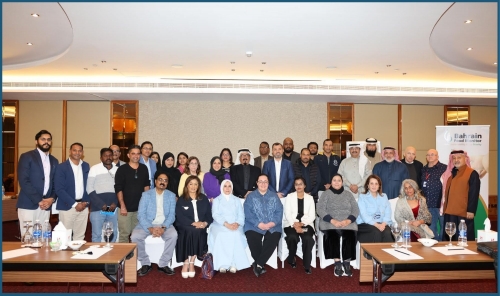
Bahrain is exploring new ways to grow its agriculture sustainably. At the seminar “Greener Bahrain: Innovations in Date Palm Production and Landscape Strategies,” conducted by the Bahrain Food Monitor recently at SwissBel Hotel Seef - experts, investors, and policymakers discussed how advanced technologies could transform date palm cultivation and green spaces in the Kingdom.
The seminar was graced by prominent dignitaries, including Dr. Zakaria Ahmed Hejres, Chairman of Bahrain Food Monitor and Mena Centre of Investment; Dr. Hana Kanoo, CEO of BFM and MCI; and Maryam Mattar, Director of BFM and MCI, reflecting Bahrain’s commitment to integrating sustainability into both agriculture and urban planning.
A key focus of the discussions was tissue culture technology, which enables the rapid production of thousands of uniform, disease-free date palms from a single parent tree. This method is faster and more reliable than traditional propagation and could help Bahrain meet growing global demand, according to Dr. Biju Mullassery, Director of Clone Biotech, who led the session. Speaking to The Daily Tribune, Dr. Mullassery emphasized that with the right support from the government and private sector partners, Bahrain could establish a world-class laboratory dedicated to large-scale date palm propagation.
The seminar delved into the potential of large-scale production of high-quality date palm seedlings, highlighting the market and business opportunities it could generate, as well as the challenges of scaling up. This initiative could create precision-based jobs, particularly for women, while also conserving indigenous date palm varieties through organogenesis technology. Experts noted that it represents a promising business opportunity in the current global market where Egypt is the largest producer followed by Saudi Arabia renowned for its premium-quality dates, and India is the biggest consumer. By leveraging tissue culture technology, Bahrain has the potential to capture a share of this growing international market while boosting local production.
However, challenges remain, including high infrastructure costs with an estimated 1.65 million BD to establish a laboratory, the need for skilled labor and training, and regulatory requirements, such as import permits for chemicals like ammonium nitrate.
Despite these hurdles, experts are optimistic. With proper government support, including subsidies and regulatory facilitation, this initiative could transform Bahrain into a global player in date palm cultivation. Investors can participate through establishing laboratories, partnering in plant multiplication, or exporting tissue-cultured plants, creating new economic opportunities for the Kingdom.
By combining the conservation of local varieties with large-scale commercial production, Bahrain is poised to build a sustainable, high-value sector that could place the country at the forefront of global date palm innovation.
Related Posts