

Working With the Land, Not Against It: Bahrain’s Path to Smarter, Greener Cities
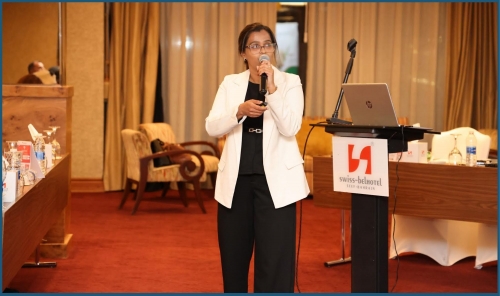
Bahrain is embracing smart landscaping strategies to tackle challenges like saline soils, water scarcity, and extreme heat. These topics were at the heart of a seminar on sustainable landscape and resource-based strategies organised by Bahrain Food Monitor at Swiss-Belhotel Seef.
Much of Bahrain’s soil is saline, calcareous, or alkaline, limiting plant survival without careful planning. Water quality is another concern, with high pH, salts, chloride, and sulphate levels posing risks to many species.
“Soil and water are the foundation of any successful landscape,” said Mrs Banupriya Sivaraj, Senior Agricultural Engineer at Kingdom Landscapes, who led the seminar. “Ignoring these factors often creates green spaces that fail and demand excessive water. Landscaping must adapt to Bahrain’s environment, not just policy targets.”
Smart Urban Solutions
With 1.7 million residents, urban areas, especially the Capital Governorate face high population density, putting pressure on green spaces. Experts highlighted vertical gardens, rooftop greenery, and compact urban planting systems as practical solutions. These small-scale approaches transform streetscapes, building facades, bus stops, and public facilities while reducing urban heat and improving air quality.
Irrigation and Plant Selection
The seminar emphasized modern irrigation methods for residential landscapes, including sub-surface drip systems and smart sprinklers. These tools optimize water use, ensuring plants thrive even in saline or challenging soils. Careful plant selection, focusing on heat-tolerant, drought-resistant, and wind-resilient species - was also stressed, with date palms highlighted for their natural salt tolerance.
Desert Landscaping for Food Security
Experts discussed how desert landscape strategies, high-tech greenhouses, desert agroforestry, and fruit orchards can boost fruit and vegetable production, particularly in rural areas. These approaches make productive use of arid land and contribute to Bahrain’s long-term food security goals.
Everyone Can Contribute
Mrs Sivaraj urged residents to plant at least one tree or plant each, noting that collective efforts could help achieve Bahrain’s target of 3.5 million trees by 2035. “If each person contributes even one plant, it brings us closer to our national greening goal,” she said.
A Smarter, Greener Future
The seminar concluded with a clear message: Bahrain’s green future depends on working with nature, not against it. Through smart urban planning, climate-adaptive planting, modern irrigation, desert landscape strategies, and active public participation, the Kingdom can expand green spaces sustainably, improve urban livability, and make environmental and food security goals a tangible part of everyday life.
Related Posts