

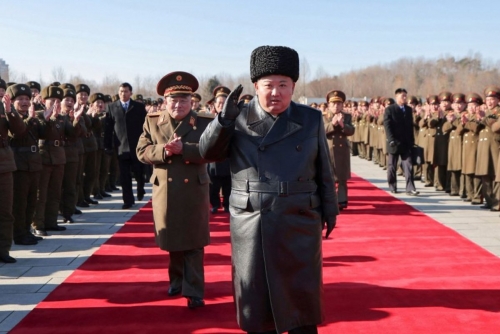
North Korea tests latest weapons that included missiles with cluster-bomb warheads
Email: online@newsofbahrain.com
PYONGYANG:Between April 6 and April 8, 2026, North Korea conducted a targeted three-day weapons campaign that signals a sophisticated evolution in its regional strike capabilities. This window of activity moved beyond traditional nuclear posturing to focus on high-density destruction and the neutralization of regional defense systems.
The primary advancement showcased was the deployment of cluster-bomb warheads on Hwasong-11 ballistic missiles. Designed for ‘area denial,’ these munitions can saturate approximately 17 acres with high-intensity explosives, making them lethal against airfields and troop concentrations. Unlike standard warheads, these are designed to fly at low altitudes with maneuverable trajectories, specifically engineered to bypass the radar and interceptor shields currently protecting South Korea and Japan.
The testing spree also integrated electronic and infrastructure-focused warfare, including carbon-fiber "sham" bombs designed to disable power grids and paralyze strategic infrastructure. The military also tested electromagnetic systems and mobile, short-range anti-aircraft defenses to secure their own airspace during a conflict.
By timing these tests during the 14-day ceasefire between the U.S. and Iran, Pyongyang has successfully forced itself back to the forefront of the global security agenda. The message is clear: while world powers are occupied with Middle Eastern diplomacy, North Korea is refining the tools necessary to fight and win a localized, tactical war.
This three-day window marks a transition from a purely deterrent-based strategy to one of practical, tactical utility. By combining cluster munitions with defense-evading flight paths, North Korea has significantly raised the stakes for regional stability, challenging the efficacy of current international defense postures.
Photo Credits: AFP
Related Posts