

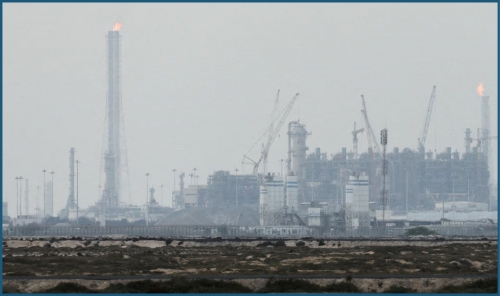
17% of export capacity knocked offline: Qatar
Iranian attacks targeting energy infrastructure in Qatar have knocked out nearly 17 percent of the country’s liquefied natural gas (LNG) export capacity, delivering a significant blow to one of the world’s top gas suppliers.
According to Reuters, QatarEnergy CEO Saad Sherida Al-Kaabi said the damage could lead to an estimated $20 billion in annual revenue losses while disrupting supply to key markets across Europe and Asia.
Al-Kaabi confirmed that two of Qatar’s 14 LNG production trains and one of its two gas-to-liquids (GTL) facilities were damaged in what he described as unprecedented strikes.
The disruption is expected to remove approximately 12.8 million tonnes per year of LNG production for a period of three to five years, raising concerns over prolonged instability in global energy markets.
He expressed shock over the attacks, noting the timing during Ramadan and describing the strikes as unexpected given regional ties.
QatarEnergy is now expected to declare force majeure on long-term LNG contracts for up to five years, potentially affecting shipments to countries including Italy, Belgium, South Korea, and China.
The company had already issued a shorter-term force majeure following earlier attacks on the Ras Laffan industrial hub but may extend it depending on how long the disruption continues.
Beyond LNG, the strikes are projected to reduce condensate exports by around 24 percent and liquefied petroleum gas (LPG) output by 13 percent. Helium production could fall by 14 percent, while naphtha and sulphur output may each decline by approximately 6 percent.
The damaged facilities, valued at around $26 billion, include assets partly owned by ExxonMobil, which holds stakes in two of the affected LNG trains.
Al-Kaabi emphasized that production cannot resume until hostilities come to an end.
The escalation follows Iranian strikes on Gulf energy infrastructure after earlier Israeli attacks on Iranian facilities, marking a sharp intensification of regional tensions with potential global consequences for energy supply chains.
Related Posts