

Qatar LNG Output Hit by Missile Attacks, $20 Billion Annual Loss Estimated
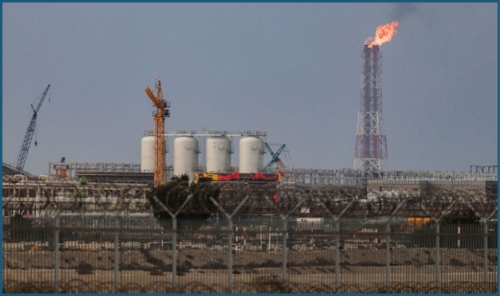
Doha: QatarEnergy has confirmed significant damage to its facilities at Ras Laffan Industrial City following missile attacks on March 18 and early March 19, 2026, resulting in a major disruption to the country’s liquefied natural gas (LNG) production.
His Excellency Saad Sherida Al-Kaabi, Minister of State for Energy Affairs and President and CEO of QatarEnergy, stated that the attacks have reduced Qatar’s LNG export capacity by approximately 17%, leading to an estimated annual revenue loss of $20 billion.
Al-Kaabi confirmed that two LNG production units, Train 4 and Train 6, were severely damaged. These units together produce 12.8 million tonnes per annum (MTPA), accounting for a significant portion of Qatar’s exports. Train 4 is a joint venture between QatarEnergy and ExxonMobil, while Train 6 is also jointly operated by the two companies.
Repair work on the damaged facilities is expected to take between three to five years. As a result, QatarEnergy may be forced to declare long-term force majeure on certain LNG supply contracts, affecting key markets in Europe and Asia, including China, South Korea, Italy, and Belgium.
Despite the scale of the attacks, Al-Kaabi confirmed that no injuries were reported. He described the strikes as “unjustified and senseless,” adding that they represent a threat not only to Qatar but also to global energy security and stability.
The missile strikes also impacted the Pearl Gas-to-Liquids (GTL) facility, operated by Shell. One of its production units is expected to remain offline for at least one year while damage assessments continue.
The disruption is projected to significantly affect associated product outputs, including condensates, liquefied petroleum gas (LPG), naphtha, sulfur, and helium, all of which represent substantial shares of Qatar’s exports.
Al-Kaabi praised the swift response of Qatari military and security forces, as well as emergency teams in the energy sector, for containing the situation efficiently and ensuring public safety.
Related Posts