

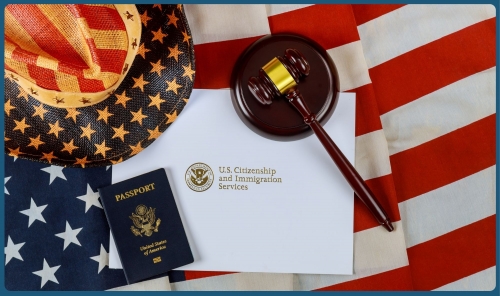
US Supreme Court Rules Birthright Citizenship Protected Under Constitution
TDT | Manama | Email : online@newsofbahrain.com
The United States Supreme Court has ruled that the Constitution guarantees birthright citizenship to children born in the country regardless of their parents' immigration status, striking down President Donald Trump's executive order that sought to restrict the long-established right.
In a narrow 5-4 decision issued on Tuesday, the court ruled that Trump's January 2025 executive order violated the Citizenship Clause of the 14th Amendment, reaffirming that anyone born in the United States and subject to its jurisdiction is automatically a US citizen.
Chief Justice John Roberts, writing for the majority, stated that children born in the United States to parents who are either unlawfully or temporarily present in the country are still "subject to the jurisdiction" of the United States and therefore acquire citizenship at birth under the Constitution. He described citizenship as "the right to have rights" and said the framers of the 14th Amendment intended that protection to apply to every free-born person in the country.
Birthright citizenship has been part of the US Constitution since the adoption of the 14th Amendment in 1868 following the Civil War. The provision was introduced to ensure citizenship for formerly enslaved people and has since been interpreted as granting automatic citizenship to nearly everyone born on US soil.
President Trump signed the executive order on his first day after returning to office in January 2025. The measure directed federal agencies to deny automatic citizenship to children born in the United States unless at least one parent was a US citizen or lawful permanent resident. The administration argued that the Constitution did not require citizenship for children born to parents who were in the country illegally or temporarily.
However, the order never came into effect after it was immediately challenged by immigrant rights organisations, expectant parents and attorneys general from 22 states. Lower courts blocked its implementation while the legal battle proceeded to the Supreme Court.
The case, Trump v. Barbara, focused on the interpretation of the 14th Amendment, with the Supreme Court ultimately reaffirming more than 150 years of constitutional precedent.
Justice Brett Kavanaugh agreed that the executive order was unlawful but said he would have based his decision on federal immigration law rather than the Constitution. Justices Clarence Thomas, Samuel Alito and Neil Gorsuch dissented, with Thomas arguing that the ruling diminished the value of American citizenship.
The decision marks another legal setback for the Trump administration, following a recent Supreme Court ruling that struck down one of the president's key tariff policies. Despite those setbacks, the court has supported the administration in several other immigration-related cases in recent months.
The latest ruling reinforces that the constitutional guarantee of birthright citizenship cannot be changed through executive action and remains protected under the 14th Amendment.
Related Posts