

Ramadan majalis keep Manama’s memories alive
TDT | Manama
Email: mail@newsofbahrain.com
The old streets of Manama take on a special spirit during Ramadan, where tradition, faith and memory meet in ways that are difficult to find anywhere else.
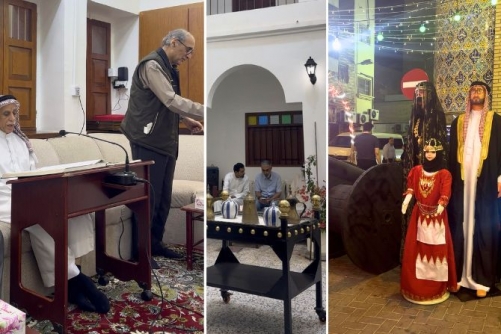
During a special tour by The Daily Tribune, the atmosphere becomes clear from the moment one enters the capital's old quarters. Ramadan decorations stretch across the narrow streets, while the sound of Qur’an recitations flows gently through loudspeakers from different majalis. On some corners, small street stalls offer tea, water and light foods such as dates to passersby and visitors.
Residents say Manama has over twenty Ramadan majalis, and each one carries its own story.
Among them is the majlis of Bait Haji, an open-air gathering space inside a traditional Bahraini house. The building has walls on all four sides, with an open courtyard in the middle where guests sit and talk under the night sky, surrounded by the quiet beauty of old architecture.
One Manama resident told The Daily Tribune that Ramadan in the capital has a unique flavour. Many original Manama families no longer live in the area because land is limited and new homes could not be built there. Today, these families are spread across different parts of Bahrain, yet many still keep what they call “the old house” in Manama—the home that once belonged to their fathers or grandfathers and where they spent their childhood.
For them, Ramadan becomes a time when everyone returns to the majalis, reconnecting with relatives and sharing stories of a past filled with simple moments and neighbourhood memories.
An elderly resident said he feels a quiet sadness when he meets younger generations whose families are originally from Manama but who know little about the area. Some, he said, even mention the district they live in today rather than Manama when asked where they are from.
His message to parents is clear: bring children back to Manama from time to time, especially during occasions like Ramadan, so they can walk its streets, learn the names of its neighbourhoods, and see the homes where their families once lived.
Related Posts