

Middle East Airlines Face Mounting Pressure as Geopolitics Disrupts Aviation Recovery
email: online@newsofbahrain.com
Dubai: The global aviation industry entered 2026 expecting a year of strong expansion after recovering from the Covid-19 pandemic, but fresh geopolitical tensions have disrupted that trajectory, placing Middle East carriers under significant strain.
Industry experts say airlines are now facing a prolonged period of uncertainty driven by conflict-related airspace restrictions, rising fuel costs and operational disruptions, even as passenger demand remains strong.
“Aviation as the patient is walking, but the storm just changed the forecast,” said Linus Benjamin Bauer, founder of BAA and Partners, describing an industry that had largely moved beyond pandemic recovery before new conflicts altered its course.
Before the latest escalation, airlines were on track to carry more than 5 billion passengers globally and generate revenues exceeding $1.05 trillion in 2026. However, a major disruption in late February grounded more than 20,000 flights and stranded over a million passengers worldwide, highlighting the fragility of the sector’s recovery.
Analysts say the Middle East is facing the most immediate challenges despite its strong long-term growth prospects. The International Air Transport Association had projected the region would deliver the highest profitability margins globally in 2026, with net margins of 9.3 per cent. That outlook is now under pressure.
“The Middle East aviation sector is entering a defining phase,” said Abhishek Jain, chief executive of EIRS, citing a more complex risk environment shaped by volatile oil prices, longer flight routes and rising insurance costs.
Airlines are being forced to reroute flights to avoid conflict zones, increasing travel times and fuel consumption, while war-risk insurance premiums have also risen sharply.
Experts say the nature of disruption has shifted from demand-driven to operational. Unlike the pandemic, which grounded travel demand, the current crisis is constraining airspace and route availability.
“The planes exist, but the airspace doesn’t,” Bauer said, noting that even with strong passenger demand, airlines cannot easily restore schedules when key routes remain inaccessible.
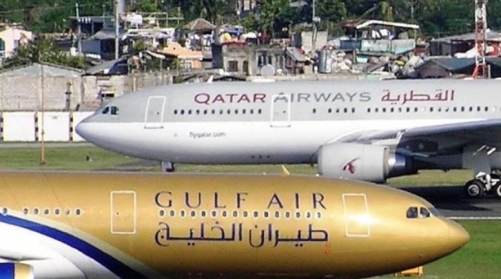
Carriers in the Gulf, including Emirates, Qatar Airways and Etihad Airways, are expected to be disproportionately affected due to their reliance on connecting traffic through regional hubs.
“Any disruption to regional connectivity has an outsized impact on their performance,” said Sergey Glinyanov, senior analyst at Freedom Broker.
At the same time, airlines face structural challenges from aircraft shortages and supply chain delays. Industry backlogs now exceed 17,000 aircraft globally, with delivery delays expected to persist into the next decade. This has forced carriers to keep older, less fuel-efficient aircraft in service, further increasing costs.
Despite these pressures, analysts do not expect a collapse in global airline profitability. However, margins are likely to narrow, with Middle East carriers facing greater short-term impact compared to their US and European counterparts.
“Profitability will likely be the domain for US and European carriers while GCC airlines will be hit hard,” said Saj Ahmad, chief analyst at Strategic Aero Research.
Looking ahead, airlines are expected to reshape their networks by prioritising profitable long-haul routes, reducing weaker connections and reallocating aircraft to more stable corridors.
While the near-term outlook remains uncertain, long-term growth prospects for Middle East aviation remain intact. Passenger traffic in the region is projected to nearly double to 530 million by 2043, provided stability returns.
Analysts say the next phase of growth will depend less on demand and more on resilience, with airlines focusing on managing risk, maintaining flexibility and navigating an increasingly volatile operating environment.
Related Posts