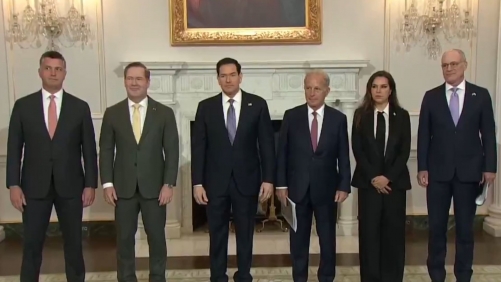
Lebanon and Israel have held their first direct talks in more than three decades, meeting in Washington on Tuesday as tensions continue to escalate along the Lebanese–Israeli border.
The discussions are being mediated by U.S. Secretary of State Marco Rubio and include Israeli Ambassador to the United States Yechiel Leiter and Lebanese Ambassador Nada Hamadeh Moawad. The talks mark the first formal direct engagement between the two sides since 1993.
The meeting comes against the backdrop of a prolonged and intensifying conflict between Israel and Hezbollah, which has significantly destabilized the region and caused widespread humanitarian concerns in Lebanon.
Lebanese officials have stated that their primary objective is to secure a cessation of hostilities and pave the way toward a lasting truce. The Lebanese government has expressed hope that diplomatic engagement will help bring an end to the fighting and reduce the humanitarian toll on civilians.
According to Lebanon’s Health Ministry, more than 2,000 people have been killed in Israeli strikes in recent months, including hundreds of women, children, and medical workers. Thousands more have been injured, while over one million residents have been displaced due to ongoing violence.
On the other side, Israel maintains that its military operations are aimed at countering Hezbollah’s activities and securing its northern border. Israeli officials have indicated that displaced civilians will not be able to return home until they consider the border region fully secure and demilitarized.
However, the talks face major political obstacles. Hezbollah has strongly opposed the negotiations, stating that it does not recognize or support any agreements reached without its participation. The group has also insisted that Lebanon should not engage in direct talks with Israel, arguing instead for continued indirect mediation through international partners.
Lebanon, however, has chosen to represent itself directly in the discussions, despite criticism from Hezbollah-aligned political figures. The group retains significant influence within Lebanon’s political and military landscape, particularly in southern and eastern regions of the country.
Israeli Foreign Minister Gideon Saar has maintained that the central issue is not Lebanon itself but Hezbollah’s military and financial network, which Israel claims has contributed to regional instability. Israeli officials have repeatedly ruled out agreeing to a ceasefire at this stage.
The talks in Washington are also seen as part of broader international efforts to stabilize the region and prevent further escalation. A U.S. State Department official said the discussions focus on long-term security arrangements along Israel’s northern border and strengthening Lebanon’s ability to assert control over its territory.
Despite the historic nature of the meeting, major disagreements remain unresolved, particularly over ceasefire conditions, military presence in southern Lebanon, and the role of Hezbollah in Lebanon’s political system.
The outcome of the Washington talks is expected to shape the next phase of diplomatic engagement between the two countries, though analysts caution that deep mistrust and ongoing violence may limit immediate progress.