

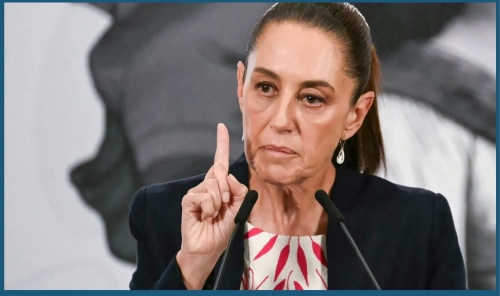
Mexico Considers Fracking Plan to Cut Reliance on US Gas
Mexico is considering a major shift in its energy policy, with President Claudia Sheinbaum proposing the development of unconventional gas reserves to reduce reliance on imports from the United States.
The plan aims to tap into an estimated 141 trillion cubic feet of gas reserves, which are typically extracted through hydraulic fracturing, or fracking. The method has long faced opposition in Mexico due to environmental concerns, including high water usage, pollution, and potential seismic risks.
The proposal comes amid rising global energy pressures linked to geopolitical tensions, including the Iran conflict, which have highlighted the risks of heavy dependence on imported energy. Mexico currently imports about 75 percent of its natural gas needs, making it the world’s largest buyer of US gas.
Sheinbaum said an environmental committee will review the plan over the coming months to determine whether the reserves can be developed in a sustainable and cost-effective manner.
If approved, the strategy could significantly boost domestic production, increasing output from around 2.3 billion cubic feet per day to 5.8 billion cubic feet per day by 2035.
The move represents a policy shift from former president Andrés Manuel López Obrador, who strongly opposed fracking and attempted to ban the practice. While Sheinbaum has avoided directly using the term “fracking,” she pointed to advances in technology that may reduce its environmental impact.
Experts say the plan could support Mexico’s energy sector, which has struggled with declining output, but its success may depend on greater openness to private investment alongside the state-owned Pemex.
Environmental groups, however, have warned that expanding fracking could pose serious ecological risks. At the same time, the government is also looking to expand renewable energy sources such as solar, wind, and geothermal power to balance energy security with sustainability.
Related Posts