

NATO 'turned their backs' on US over Iran: White House
Email: online@newsofbahrain.com
WASHINGTON: The White House launched a scathing critique of NATO on Thursday, with President Donald Trump accusing European allies of abandoning the United States during the height of its military confrontation with Iran. Following a high-stakes meeting with NATO Secretary-General Mark Rutte, the administration signaled a fundamental breakdown in the transatlantic alliance over the lack of support for U.S. operations in the Middle East.
President Trump took to social media to vent his frustration, stating that NATO member states ‘turned their backs’ on the U.S. when it came to securing the Strait of Hormuz and providing logistical assistance for the Iran campaign. He specifically highlighted the refusal of several European nations to grant overflight rights for American military assets and their reluctance to contribute to the naval coalition tasked with protecting global energy supplies.
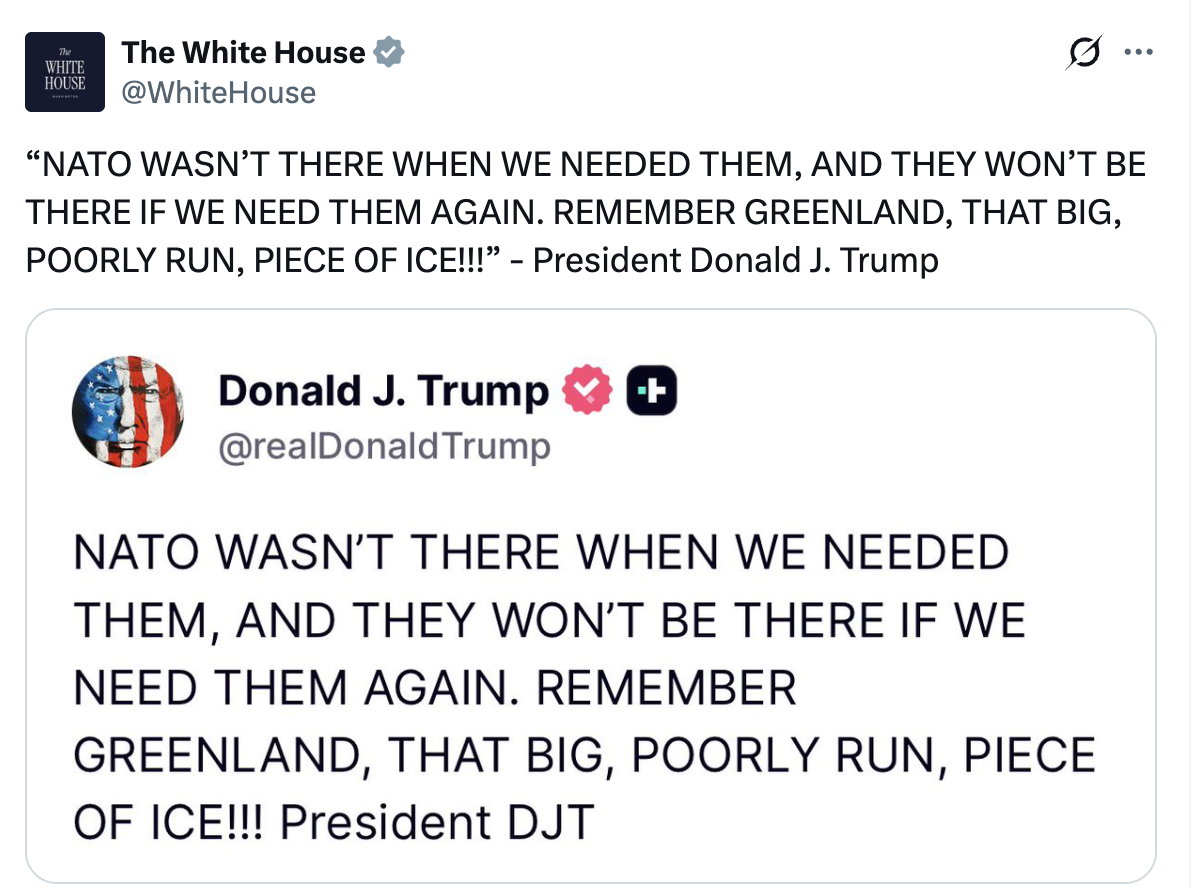
The President warned that the U.S. would no longer be the ‘guarantor’ of European security if those nations were unwilling to stand by Washington in its own times of need.
White House officials confirmed that the President is now ‘actively reviewing’ the United States' future participation in NATO. Central to this review is a proposal to relocate U.S. military bases and personnel from "unreliable" European nations to countries that have demonstrated greater military alignment with current U.S. objectives.
This pivot includes renewed discussions regarding the strategic acquisition of Greenland, which the administration views as a vital outpost for Western defense that current NATO structures have failed to properly leverage.
Secretary-General Mark Rutte characterized the meeting as ‘difficult but necessary,’ acknowledging the deep rift over the Iran conflict. While Rutte emphasized the historical importance of the alliance, he faced a White House that is increasingly viewing NATO through a transactional lens.
As the 14-day ceasefire with Tehran remains in place, the diplomatic focus has shifted from the battlefield in the Persian Gulf to the conference rooms of Washington and Brussels, where the very survival of the 77-year-old alliance now appears to be at risk.
Related Posts