

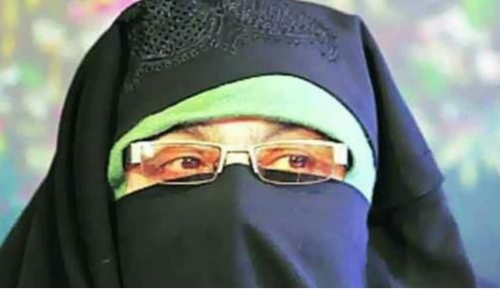
Indian Court Hands Life Term to Kashmiri activist Asiya Andrabi
email: online@newsofbahrain.com
New Delhi: An Indian special court has sentenced Kashmiri resistance leader Asiya Andrabi to life imprisonment, while her associates Sofi Fehmeeda and Nahida Nasreen were awarded 30-year prison terms under the controversial Unlawful Activities (Prevention) Act (UAPA).
The sentences were delivered by Additional Sessions Judge Chander Jit Singh at a special National Investigation Agency court in Delhi, following arguments on the quantum of punishment.
The three had been convicted on January 14, 2026, under multiple provisions of the Indian Penal Code, including charges related to conspiracy, terrorism, and waging war against the state.
The verdict has drawn strong criticism from Kashmiri and international rights groups. The Worldwide Lawyers Association said prolonged pre-trial detention, denial of due process, and life sentences amounting to incarceration until natural death warrant urgent international scrutiny.
Legal experts and Kashmiri leaders have frequently accused New Delhi of using anti-terror laws to criminalise dissent and suppress movements advocating self-determination in Kashmir.
The case adds to a growing number of prosecutions under the UAPA, a law widely criticised by civil liberties groups for its broad scope and alleged misuse.
In 2021, the Organisation of Islamic Cooperation condemned the detention of Andrabi and her associates, calling the charges baseless.
Andrabi, founder of the now-banned Dukhtaran-e-Millat (DeM), was arrested by the National Investigation Agency in April 2018. Her husband, Qasim Faktoo, has been imprisoned for more than three decades.
Prosecutors argued that Andrabi had waged war against India and sought the maximum punishment, saying a harsh sentence was necessary as a deterrent.
The case follows other high-profile convictions, including that of Yasin Malik, who was sentenced to life imprisonment in 2022 on similar charges.
Kashmir remains a long-standing flashpoint between India and Pakistan. Since 1989, the region has witnessed an armed insurgency, with rebel groups seeking independence or merger with Pakistan.
Following the revocation of the region’s constitutional autonomy in 2019, India has imposed tighter controls, drawing criticism from rights groups that accuse authorities of using repression to curb dissent.
Related Posts