

Trump’s Greenland Framework Mirrors 1951 Defence Pact
Email: online@newsofbahrain.com
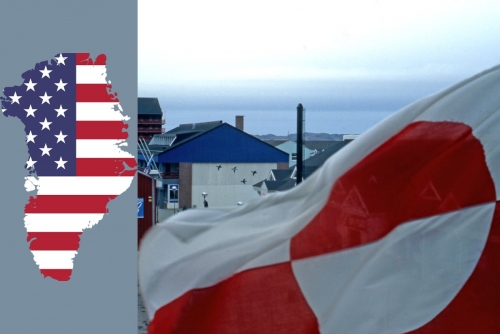
Washington: President Donald Trump’s announcement of a “framework of a future deal” concerning Greenland has drawn scrutiny because much of what he is describing appears to align with an existing 1951 defence agreement between the United States and Denmark, rather than a fundamentally new arrangement, analysts and officials say. The comments came after Trump spoke at the World Economic Forum in Davos, Switzerland, where he unveiled his broader vision for Arctic security cooperation and said he had secured long-term U.S. interests in Greenland.
The 1951 treaty, concluded during the early Cold War, already granted the United States broad rights to maintain and operate military installations in Greenland with Danish consent rights that have been updated but remain in force. Under this longstanding pact, the U.S. operates crucial facilities such as the Pituffik Space Base, and has the ability to station forces, deploy equipment and conduct defence operations with Danish approval. Many of the elements Trump has touted, including permanent military access and an expanded role for Arctic defence, are central to or compatible with that existing agreement, leading experts to question how much substantive change the new “framework” offers beyond formalising discussions about modernising the defence pact.
Trump’s remarks, in which he said the arrangement would last “forever” and provide “total access” for U.S. strategic needs, have been met with skepticism from Danish and Greenlandic leaders, who have insisted that sovereignty remains non-negotiable and that no concrete deal transferring ownership or control of the island has been finalised. Denmark’s prime minister has stressed that Arctic security cooperation should respect territorial integrity, while the premier of Greenland said he was unaware of any specific agreement details.
Officials close to the discussions indicate that the emerging framework may pair the traditional defence rights enshrined in the 1951 accord with enhanced NATO engagement in Arctic security, potentially updating how allies collaborate to deter Russian and Chinese influence in the region but without altering Greenland’s status as part of the Kingdom of Denmark.
Moreover, critics argue that by framing longstanding military cooperation as a new achievement, Washington risks overhyping what may amount to a reaffirmation of existing commitments rather than securing fresh concessions from Copenhagen. It remains unclear what precise legal or operational changes will follow, as negotiators continue discussions and no written text outlining the new framework has been publicly released.
Related Posts