

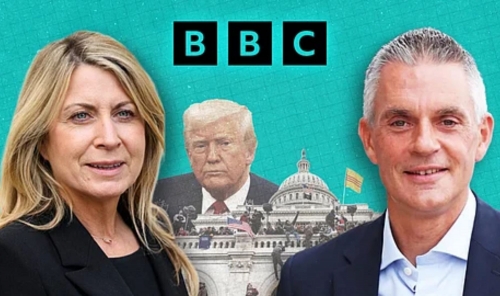
BBC Faces Leadership Crisis Over Edited Trump Speech Controversy
The BBC is facing a major leadership crisis after allegations that its flagship Panorama programme misleadingly edited a speech by U.S. President Donald Trump, sparking accusations of bias and prompting the resignation of two of its top executives.
Director General Tim Davie and BBC News CEO Deborah Turness resigned on Sunday amid growing backlash over the controversial documentary. The edit in question appeared to suggest that President Trump had directly incited the January 6 attack on the U.S. Capitol.
BBC Chair Samir Shah described the resignations as marking a “sad day for the BBC” and was scheduled to appear before the UK Parliament’s Culture, Media and Sport Committee on Monday to offer an explanation.
The state-funded broadcaster has faced repeated accusations of bias from across the political spectrum in recent years, including criticism over its reporting on the war in Gaza.
President Trump celebrated the resignations on his social media platform, labelling BBC journalists as “corrupt” and “dishonest.” In contrast, Turness defended the network in her farewell message, stating that “allegations that BBC News is institutionally biased are wrong.”
The controversy comes as the UK government prepares to review the BBC’s Royal Charter, which defines its governance and public mission. The current charter expires in 2027 and must be renewed to secure the broadcaster’s funding and independence.
Culture Secretary Lisa Nandy called the situation “incredibly serious,” noting that the upcoming review would help the BBC “adapt to a new era of media accountability.”
Reactions have been sharply divided. Conservative figures, including former Prime Minister Boris Johnson and Tory leader Kemi Badenoch, welcomed the resignations, citing a “series of serious failures.” Meanwhile, Liberal Democrat leader Sir Ed Davey urged Prime Minister Keir Starmer to resist political pressure from Washington, saying, “It’s easy to see why President Trump wants to undermine the world’s number one news source — we can’t let him.”
As the BBC works to contain the fallout, the broadcaster faces one of its most challenging moments in decades — balancing public trust, political scrutiny, and the future of its independence.
Related Posts