

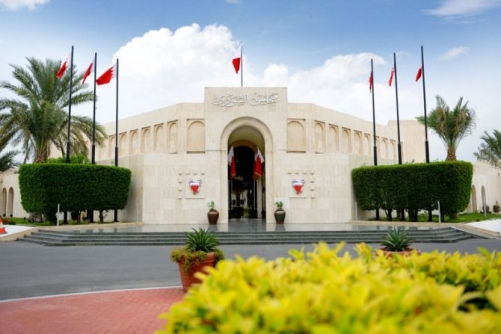
Shura Council Backs Health Tourism Law Proposal
TDT | Manama
Email: mail@newsofbahrain.com
The Shura Council voted on Sunday to allow consideration of an amended law proposal to regulate health tourism, then referred it to the government to draft it into a bill.
The proposal was put forward by Dr Jameela Al Salman, Dr Jehad Al Fadhel, Dalal Al Zayed, Dr Ibtisam Al Dallal and Ali Al Aradi. Members debated it after receiving the Services Committee’s report.
Speaking as the committee’s rapporteur, Dr Al Dallal said the proposal aims to create a full legal framework for health tourism in Bahrain, strengthen the kingdom’s position as a regional centre for healthcare services, protect patients arriving from abroad, ensure service quality, and support the economy by diversifying income in line with Bahrain Economic Vision 2030 and the tourism sector strategy.
She told the Council the proposal is closely linked to the tourism sector strategy for 2022–2026, which treats medical tourism as a key pillar. She said a dedicated law is needed because the sector cuts across several areas, with healthcare meeting tourism, investment plans running alongside service standards, and visa procedures tied to oversight and transparency.
Dr Al Dallal said health tourism requires clear rules that build trust between the patient and the provider. Visitors, she said, need clear advance information about the nature of treatment, available options, cost and potential risks before they decide to travel. A clear legal framework, she added, would strengthen transparency and give patients a fuller picture of the service they will receive.
She also pointed to overlapping roles across state bodies, from health regulation and licensing to entry, residence and tourism matters, as well as investment, promotion and work with other countries. That overlap, she said, calls for a clear system that pulls efforts together. The proposal would address this by creating a national committee for health tourism to support planning, co-ordination and follow-up across the bodies involved.
During the debate, the Shura Council’s second deputy chairperson, Dr Jehad Al Fadhel, described the proposal as a response to changes in global healthcare services and the rise of medical tourism as a driver of growth. ‘When these areas meet without a clear legislative framework, grey zones appear that can lead to clashes over powers, uneven standards, or differences in legal responsibility,’ she said.
Dr Jameela Al Salman, Head of the Services Committee, told members the proposal focuses on medical tourism, which has become a source of income for many countries. She said Bahrain has strong grounds to compete, pointing to its medical capacity, trained staff and an established health base, alongside gains in the tourism sector. ‘We are not talking about a new activity, but about putting a legal framework around an existing activity in Bahrain,’ she said, adding that the field links directly to tourism, healthcare and the visas patients may need.
She said the proposal is meant to build trust at home and abroad through clearer pricing and patient rights, while also raising Bahrain’s ability to compete with places that already run national systems for medical tourism. ‘In Bahrain we are talking about an activity that already exists, but it needs clear legislation that helps us reach a higher level of organisation,’ she said.
In its written view during the committee stage, the Ministry of Health welcomed the aims of the proposal and praised legislators for ideas to strengthen health law, while saying the government’s final view will be provided later after consultation with the relevant bodies. The ministry said the definition of health tourism should match Bahrain’s strategy and how the government wants to market the kingdom as a destination offering integrated services.
The ministry also called for clear rules on short stays linked to care, including where patients would stay during treatment. It raised the choice between staying at the treating facility throughout care or staying in tourism accommodation such as hotels and serviced apartments arranged in co-ordination with the provider, noting that this affects the role of the Bahrain Tourism and Exhibitions Authority. On the proposed ‘health tourism visa’, it said the Ministry of Interior’s view is needed on the need for such a visa and on the best way to handle it, through law or by decision, in a way that lays down procedures while leaving more room to adapt.
The proposal comprises ten articles across five chapters. It defines key terms, places duties on health institutions that provide health tourism services, and creates a National Committee for Health Tourism. That committee would be formed by decision of the Prime Minister on the proposal of the chair of the Supreme Council of Health, and would include representatives from the ministries of health, interior, foreign affairs and tourism, the Economic Development Board, the NHRA, the Royal Medical Services, the Bahrain Tourism and Exhibitions Authority, government hospitals and private medical providers.
Under the proposal, health institutions would have to provide clear information on services and cost, comply with NHRA standards, adhere to declared prices, and issue itemised invoices. Providers seeking to contract with a patient would also have to send a written invitation covering a preliminary diagnosis and its basis, the proposed care options, potential risks, and a clear cost breakdown, with an estimate for any extra treatment that may be needed.
Oversight would sit with the NHRA, which would inspect health institutions to check compliance with the law and the regulations and decisions issued to implement it. Inspectors authorised by the NHRA’s chief executive would be able to enter facilities and related centres, review and copy records, and hear statements from staff as part of administrative investigations. The NHRA would also be able to impose administrative measures for breaches, including written warnings and limits or conditions on services, without prejudice to criminal or civil liability.
Related Posts