

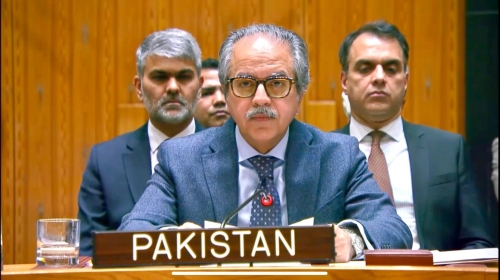
Pakistan Abstains on UN Vote as Hormuz Resolution Fails Amid Veto
The United Nations Security Council has failed to adopt a draft resolution aimed at reopening the Strait of Hormuz, after it was vetoed by Russia and China, while Pakistan abstained from the vote, citing the need for continued diplomatic space amid rising Iran–US tensions.
The resolution, which sought to restore normal maritime traffic through the strategic shipping lane, was considered at a time of heightened regional instability affecting global energy flows and trade.
Pakistan urges restraint and regional solidarity
Explaining Pakistan’s position, Pakistan’s Permanent Representative to the UN, Ambassador Asim Iftikhar Ahmad, reiterated Islamabad’s “unwavering solidarity” with Bahrain and fellow Gulf Cooperation Council states, including Saudi Arabia, Qatar, Kuwait, the United Arab Emirates and Oman, as well as Jordan.
He stressed that Pakistan supports the sovereignty, territorial integrity, and security of all regional states affected by the ongoing crisis, noting that many are “not parties to the conflict but are bearing its consequences.”
Strategic importance of the Strait
The Strait of Hormuz, one of the world’s most critical energy transit routes, remains central to global oil and goods movement. Pakistan warned that disruptions are already contributing to significant economic shocks, including energy shortages, rising costs of living, and pressure on food security across developing economies, particularly in South Asia.
Diplomatic efforts emphasized
Pakistan thanked Bahrain for its role in facilitating consultations on the draft resolution and acknowledged agreement on the urgency of restoring normal maritime passage. Islamabad also reaffirmed its support for earlier Security Council efforts, including resolution 2817 presented by Bahrain on behalf of the Gulf Cooperation Council.
However, Pakistan maintained that diplomatic space must be preserved for ongoing mediation efforts, which have been recognized by the UN Secretary-General and members of the Security Council.
Calls for dialogue over escalation
The statement underscored Pakistan’s position that restraint, dialogue, and diplomacy remain the only viable path forward.
Pakistan highlighted recent diplomatic engagements, including meetings in Islamabad between Deputy Prime Minister and Foreign Minister Mohammad Ishaq Dar and the foreign ministers of Egypt, Saudi Arabia, and Türkiye, aimed at de-escalating tensions.
It also referenced discussions in Beijing between Pakistan and Chinese Foreign Minister Wang Yi, which resulted in a joint five-point initiative calling for an immediate cessation of hostilities, inclusive peace talks, protection of civilians and infrastructure, restoration of maritime security in the Strait of Hormuz, and adherence to the UN Charter.
Global impact concerns
Pakistan warned that continued instability in the Strait is creating one of the most severe energy supply shocks in recent history, with ripple effects on global markets and vulnerable populations.
The statement concluded that Pakistan remains committed to supporting all diplomatic initiatives aimed at achieving a “permanent end to hostilities” and restoring long-term stability in the region.
At the Security Council, members of the United Nations Security Council remain divided over how to address the crisis, with geopolitical tensions shaping the outcome of the vote.
Related Posts