

US-China Trade Talks Resume in Sweden Amid Tariff Deadline Pressure
TDT | Manama
Email: mail@newsofbahrain.com
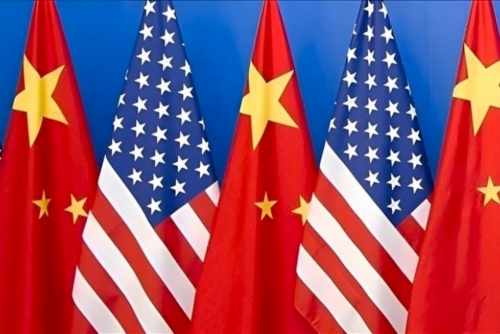
Senior officials from the United States and China are meeting in Stockholm this week to restart trade negotiations, with hopes of extending reduced tariffs and avoiding a new wave of economic strain as a key deadline approaches.
The talks, taking place over two days in the Swedish capital, bring together US Treasury Secretary Scott Bessent and Chinese Vice Premier He Lifeng. Both sides are under pressure to find common ground before the current truce on tariffs expires on August 12.
This round of dialogue comes at a critical time for President Donald Trump’s trade policy, with countries like Brazil and India also racing to secure trade deals with Washington before August 1. If no agreements are reached, these countries risk seeing US tariffs on their exports jump from the current 10% to as high as 50%.
The US has already implemented some of the steepest import duties since the 1930s, according to data from The Budget Lab at Yale University. Now, trading partners are scrambling to avoid further economic fallout.
In a statement on Monday, China's Foreign Ministry expressed hope that the meetings would be conducted in a spirit of “mutual respect and reciprocity.” Spokesman Guo Jiakun emphasized the importance of reducing misunderstandings and strengthening cooperation to ensure stable and healthy US-China relations.
Back in April, both Washington and Beijing had imposed tariffs on each other’s goods at triple-digit levels. A temporary truce in May, agreed upon during talks in Geneva, brought US tariffs down to 30% and China’s to 10%. But with that agreement nearing its expiration, the pressure is back on.
Since the Geneva truce, both sides have held follow-up talks in London to resolve lingering issues. The meetings in Sweden are now seen as a pivotal opportunity to prevent a return to more aggressive trade measures.
The world’s two largest economies will be closely watched this week—not just by markets, but by nations whose economic futures may be shaped by the outcome.
Related Posts