

Import Costs Drive Up Thobe Prices
mail@newsofbahrain
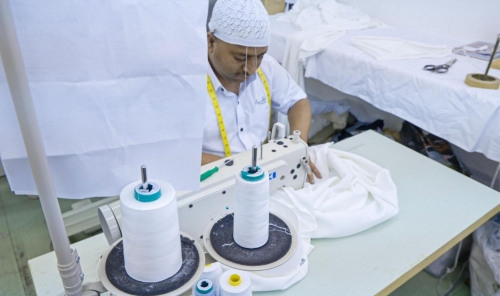
Thobe prices in Bahrain are heading for a rise as dearer cloth and sea freight squeeze tailors.
The average cost of a made-to-measure thobe remains about BD25, but shop owners say it may climb by 8 pc to roughly BD27 if import bills keep rising.
Tailors have so far absorbed the extra cost by cutting their own margins. Some said they would rather earn less than risk driving away buyers.
The rise has come from sea freight charges on goods shipped from Japan, China and South Korea. Road haulage rates within the Gulf have stayed much the same.
Sayed Hadi Al Baladi, who runs a tailoring shop in A’ali, said cloth was still easy to find in Bahrain. Most shops buy through agents and wholesalers in Kuwait and Dubai.
He said some types of cloth were likely to cost BD1 to BD3 extra, equal to a rise of between 4 pc and 12 pc.
A standard thobe now sells for between BD25 and BD28. Dearer pieces cost from BD35 to BD38.
The price of a metre of some cloth has gone up from BD3.5 to BD3.8.
A roll of Japanese cloth can cost about BD100, while wool rolls sell for about BD200. Some shops buy at least 250 rolls to give customers a wide choice of colours and cloth.
Al Baladi said many shops still had good stocks, mainly those that bought large loads before Ramadan.
But he warned that some traders might raise the price of old stock bought months ago at cheaper rates.
Prices for ghutras, shemaghs and men’s accessories remain unchanged, including high-end English shemaghs brought in from Britain.
Fahad Al Hardan, who owns a tailoring shop in Salmaniya, said trade had slowed since Eid Al Fitr.
The average price of a thobe remained near BD25, he said, even as shops paid more for thread and button padding from Germany and Britain.
Al Hardan also warned that some cloth was being sold as Japanese when it had been made elsewhere.
He said shops must be open with buyers and give clear details on where the cloth came from.
Some tailors are now using Korean cloth instead of well-known Japanese makes such as Shikibo, Toyobo and Semiramis.
Hardan called for cloth traders with skill in the field to buy straight from mills in East Asia and Europe and pick stock suited to Bahrain.
Many shops now buy through agents in Saudi Arabia.
A roll of Japanese cloth costs about BD70 on average, while genuine Semiramis can reach BD120.
Semiramis remains one of the most sought-after fabrics among Bahraini buyers, though stocks are scarce.
Al Hardan said genuine Japanese cloth was easier to check because most packs now carry the mill stamp and packing date.
Cotton and high-grade spun polyester were among the best picks for summer, he said, as they were cool, did not cling to the body and were less likely to crease.
Yasser Al Shaaban, manager of a men’s tailoring shop in Zinj, said the cost of imported cloth had edged up, while some summer types were harder to find.
The price of a metre had risen by about 200 fils, while some rolls now cost BD5 to BD6 extra.
He said a thobe priced at BD25 today may rise to about BD27 if those costs keep climbing.
But shop owners were still trying to absorb part of the rise themselves to keep prices within reach and stop trade from slowing further.
Related Posts