

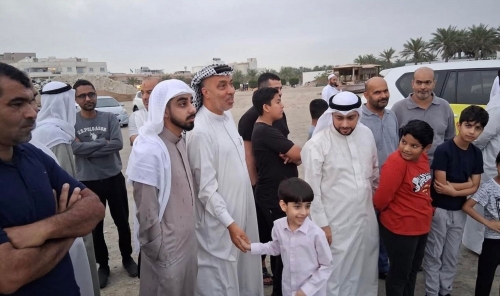
By eye and telescope: Bahrain's enduring bond with the Moon
Long before satellites and space agencies, Bahrainis were already looking to the Moon, just for a different reason. Twice a year, as Ramadan and the two Eids draw near, families across the kingdom still step outside in the evening, eyes fixed on the horizon, searching with the naked eye or through a telescope for the thin silver curve of the new crescent, the hilal, that tells them a new month has begun.
For children in particular, the hunt for the hilal is one of the most eagerly awaited moments of the year. Rooftops and open courtyards fill with excited voices as youngsters compete to be the first to spot it, tugging at their parents' sleeves and pointing at the sky, certain they have found it before anyone else.
Grandparents, who grew up scanning the same sky long before mobile phones and calendars could tell them otherwise, often use the moment to pass down stories of Ramadans and Eids gone by, turning the search into a small family ritual as much about togetherness as it is about the Moon itself.
That tradition is anchored in a formal process overseen by the Supreme Council for Islamic Affairs. Ahead of the start of every Hijri month that carries religious significance, the council's Sharia Moon-Sighting Committee convenes in the evening of the 29th day to receive reports and testimonies from anyone who has sighted the crescent. The council publicly calls on citizens and residents who spot the Moon, or who have credible information about its sighting, to come forward immediately.
Once testimonies are verified, the committee's findings determine, officially and for the whole country, when Ramadan begins and when Bahrainis wake up to Eid.
For Bahrainis, the Moon's real significance lies less in the sky itself than in what its appearance sets in motion. The sighting of a single crescent, confirmed by a handful of witnesses and verified by the Sharia Moon-Sighting Committee, is enough to shift the rhythm of an entire kingdom, from the timing of the pre-dawn suhoor to the moment families gather for Eid prayers the following morning.
It is a tradition that has stayed remarkably unchanged, families still going out to look for themselves, still hoping to be the ones who spot it first, generation after generation.
Related Posts