

Beyond the Canvas
Pablo Picasso’s Spirit Lives On in Bahrain’s Art Scene
TDT | Manama
Email: mail@newsofbahrain.com
More than a century after Pablo Picasso transformed the language of modern art, his influence continues to resonate far beyond Europe reaching into Bahrain’s contemporary art scene.
For local artists with over a decade of experience, Picasso is not simply a historical figure, but a lasting force that continues to shape how art is created, interpreted, and understood.
Today, Bahraini artists reflect on how these ideas continue to influence their work, bridging global artistic movements with local identity and personal expression.
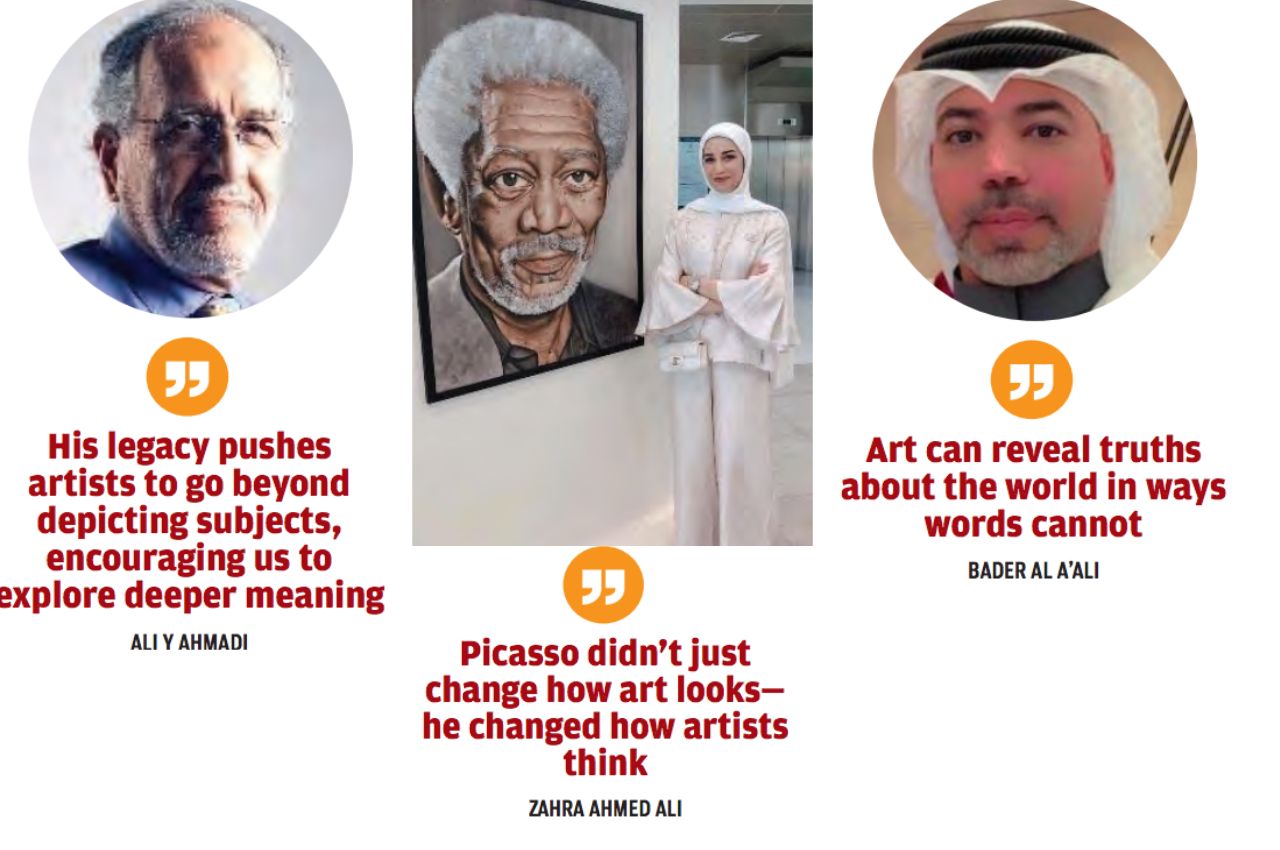
Bahraini artist Zahra Ahmed Ali, known for her emotionally driven portraiture, approaches art as a deeply personal narrative that captures both expression and story. With a background in art education and years of experience shaping her own visual identity, she sees Picasso not as a stylistic influence, but as a conceptual one. “Picasso didn’t just change how art looks, he changed how artists think,” she said.
For Ali Y Ahmadi, a practitioner of fine art and Arabic calligraphy who has participated in exhibitions across the region and internationally, Picasso’s impact lies in challenging artistic boundaries while still allowing space for diverse approaches.
“Picasso’s impact on art is stimulating artists to move beyond simply translating a subject, and instead inspiring thought and creativity in how that story is told,” he explained.
Meanwhile, Bader Al A’ali, an artist with nearly 25 years of experience spanning local and international exhibitions, reflects on Picasso’s influence as something that extends beyond technique into philosophy. His work, which moves between realism and abstraction, mirrors this evolving mindset. “Picasso did not just change how we paint; he changed how we see the world by proving that art is a powerful medium that reveals the truth,” he said.
This perspective reflects a deeper connection to Picasso’s legacy—one rooted not in imitation, but in transformation.
Vision
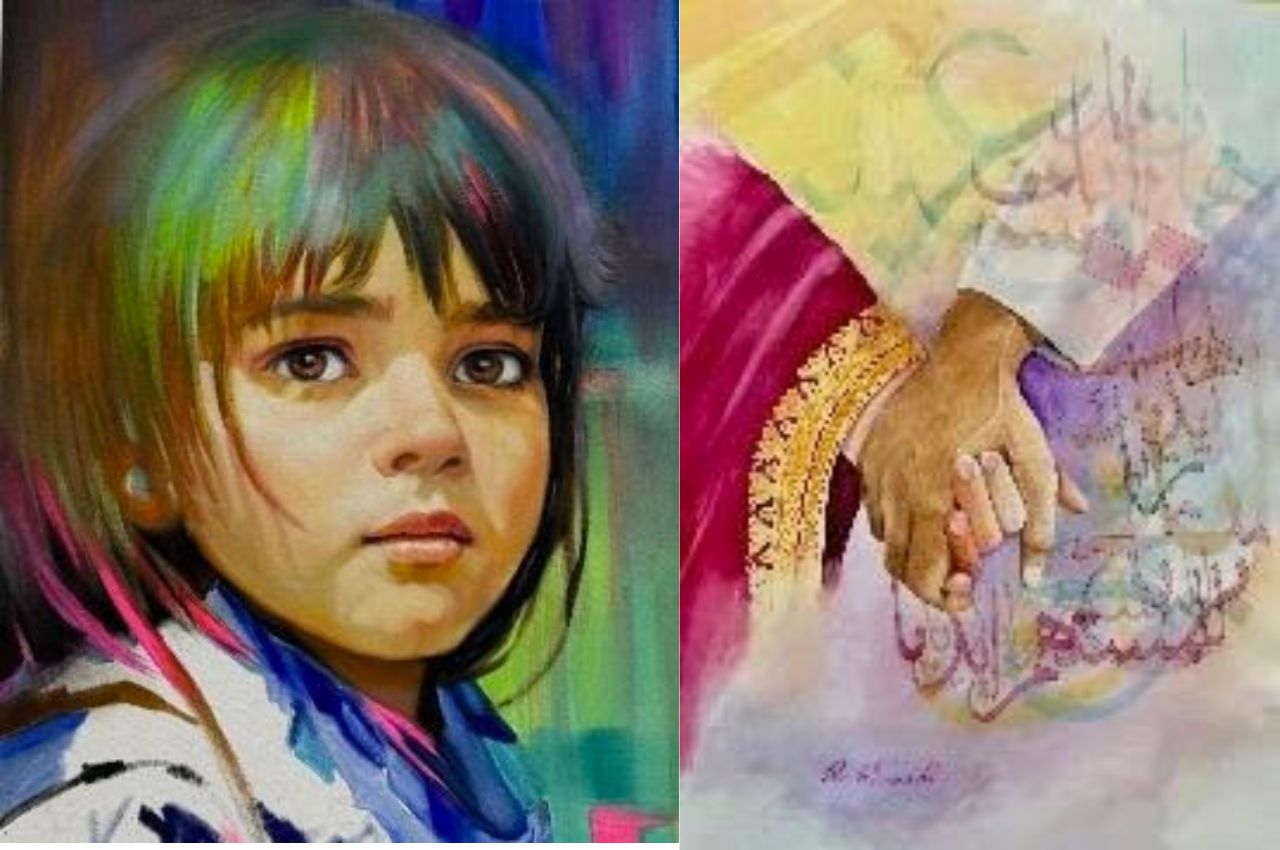
It is this transformative vision that defined Pablo Picasso’s career and continues to inspire artists across generations.
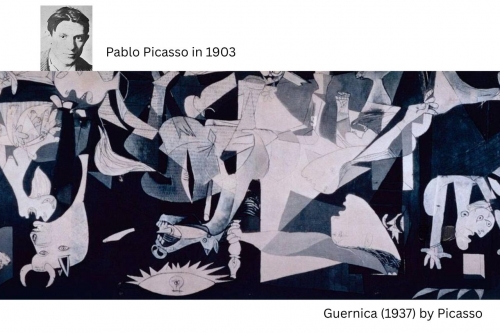
Born in 1881 in Málaga, Spain, Pablo Picasso revolutionized modern art through constant reinvention and a refusal to follow convention. His belief that “I paint objects as I think them, not as I see them” challenged the traditional role of art as mere representation, shifting it toward interpretation and intellectual expression.
One of his most powerful works, Guernica (1937), stands as a global symbol of anti-war expression. Painted in response to the bombing of the Spanish town of Guernica, the monochromatic composition captures the suffering of civilians through distorted figures and fractured forms. Its absence of colour intensifies the emotional impact, transforming it into a timeless visual protest against violence.
From Spain to Bahrain, Picasso’s legacy continues to transcend borders and time. Through the voices of contemporary Bahraini artists, his ideas are not only preserved but reinterpreted proving that true artistic influence does not fade, but evolve with every new generation.
Related Posts