

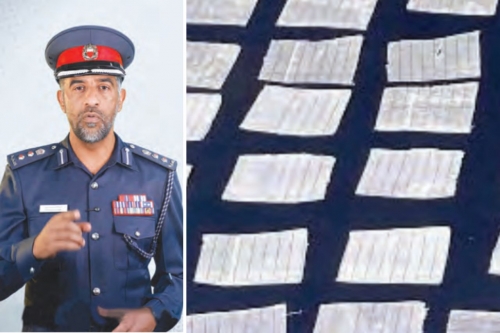
“Paper Drug” Circulating in Region
TDT | Manama
Email : editor@newsofbahrain.com
What appears to be nothing more than an ordinary sheet of paper could, in reality, be one of the most dangerous narcotics currently circulating in the region. This warning was issued by Colonel Dr. Osama Bahar as part of the Ministry of Interior’s Al Aman Program, highlighting a substance known as “A4” that is reportedly linked to severe health risks, behavioral changes, and even death.
The warning underscores growing concern over a new form of synthetic drug that is difficult to detect due to its resemblance to ordinary paper. Officials say its deceptive appearance allows it to circulate unnoticed within homes, vehicles, and personal belongings, increasing exposure risk among families and young people.
Dr. Bahar described A4 as a chemically saturated paper that can cause severe harm. “Currently, in the region, there is a dangerous type of narcotic called A4. It is an ordinary paper saturated with chemicals and toxins, and this paper causes death,” he stated.
He further explained how easily the substance blends into daily life. “The danger lies in the fact that this paper is scattered and present in the addict’s room, in front of his family, in the car, and even in the phone cover without the knowledge of parents because it appears to be ordinary paper.”
Unlike traditional drugs, A4 does not have a distinctive form or packaging, making it extremely difficult for families to recognize. It can be hidden among books, inside wallets, notebooks, or personal items without raising suspicion.
Officials also highlighted the various ways it is consumed. Users may smoke it directly, mix it with tobacco, or cut it into small pieces for use in a traditional pipe known as a “Midwakh,” increasing its accessibility and potential for misuse.
Beyond its physical dangers, A4 has been linked to significant behavioral changes. According to Dr. Bahar, “These A4 papers give the addict aggressive behaviours such as breaking things or assaults and a constant desire to get into physical fights with a malicious tendency towards those around him especially those at home.”
Authorities warn that families should not only look for full sheets of paper but for small fragments that may appear oily or unusual. These may be hidden in cars, wallets, books, or even phone covers.
Officials also stressed that discovering such materials could indicate deeper involvement in drug activity, urging immediate reporting to authorities for intervention and safety.
Related Posts