

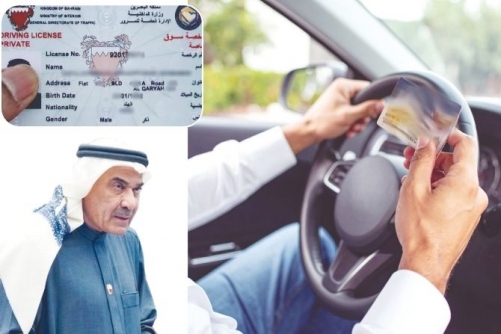
Tying expat licences to residency sparks debate
TDT | Manama
Email: mail@newsofbahrain.com
Driving licences of non-Bahrainis could soon be linked to the validity of their residency permits, if lawmakers approve a new bill under consideration.
One of two proposals up for a vote would also allow executive regulations to set separate rules for foreign applicants.
Urging MPs to back the measures, the Foreign Affairs, Defence and National Security Committee said the changes could help ease traffic congestion by giving authorities greater control over the issuance of licences to non-Bahrainis.
Government flags practical concerns
The government, however, warned of implementation challenges. It noted that existing rules already require lawful residency as a basic condition for issuing or renewing a driving licence for non-Bahrainis.
According to officials, linking licences directly to residency permits could create complications related to fees, renewal timelines, and cases where residency periods are shorter or longer than the standard five-year licence term.
Ministers also argued that the proposal may not achieve its intended goal in all cases. For instance, Bahrain’s golden residency permit is valid for 10 years—double the duration of a standa r d driving licence. They stressed that residency permits and driving licences serve different purposes and should not be formally tied. Concerns were also raised about potential implications for Bahrain’s reciprocal arrangements with other countries.
Rights and administrative concerns raised
The Interior Ministry echoed these concerns in written submissions and meetings in November 2024 and January 2025, warning the proposal could create uneven renewal cycles—from one to five years—and strain the General Directorate of Traffic.
It also cited a Constitutional Court ruling, noting that restricting a foreigner’s ability to drive could touch on fundamental rights.
The second bill drew stronger criticism. It would allow executive regulations to set separate rules for foreign applicants, which the government said is unnecessary as current provisions already permit this.
The Justice and Interior ministries agreed, adding the measure would not ease congestion and could conflict with freedom of movement.
The National Institution for Human Rights also raised concerns, saying core rules on issuing licences should remain in law, with regulations limited to implementation. Broad delegation, it warned, could raise questions over compliance with Article 12 of the International Covenant on Civil and Political Rights.
Committee stance unchanged
Despite these objections, the committee retained the core provisions of both bills. It did, however, propose a minor amendment to the preamble, replacing the reference to the 2018 amendment with the phrase “and its amendments” in citing the Traffic
Related Posts