

Shura Council rejects draft laws to shift state-linked company profits to general budget
TDT | Manama
Email: mail@newsofbahrain.com
Two draft laws to move more state-linked profits into Bahrain’s general budget were rejected by the Shura Council yesterday after members heard that the plan ran against current law, cut into company independence and could leave state firms borrowing to meet budget payments.
The two draft laws, both based on proposals first sent by Parliament, sought to send more public money into the state’s main account.
One would have changed Article 10 of Decree-Law No. 39 of 2002 on the general budget so that the revenues of all public authorities and institutions, along with the State’s net profits from wholly owned companies and its share of profits in other firms after the legal reserve was set aside, would go into the public account.
The other would have required at least 50 per cent of the State’s net profits from Bahrain Mumtalakat Holding Company and Bapco Energies to be entered in the general budget after the legal reserve was deducted.
Route
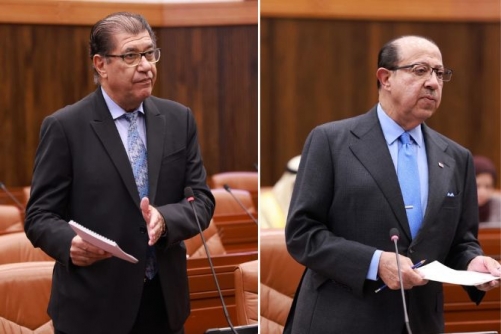
Opening the case against the bills, Financial and Economic Affairs Committee chairman Khalid Al Maskati said the committee agreed with the aim of using public income, “especially non-oil revenues”, to help cut the budget deficit, but said the route taken in the bills was wrong.
Fixing a set share of Mumtalakat and Bapco Energies’ net profits, he said, would mean “the institutions would have to borrow what they need to meet their obligation to the budget”.
He added: “That is not acceptable to the committee, nor to the council.”
First deputy chairman Jamal Fakhro said the plan cut against the whole purpose of creating public bodies and state firms with their own finances.
“If we create a public institution, that means it is responsible for its revenues and expenses,” he told the chamber.
“How can I tell that institution to transfer its revenues to the government and then bear its own expenses?”
Funds
He said such bodies were created in part so the Finance Ministry would not have to handle all those funds itself, asking what sense there was in pulling all their money into the state budget only to send money back to them later.
“I believe the draft law has not been studied sufficiently,” he said.
After studying both drafts and hearing from the Ministry of Finance and National Economy, Mumtalakat and Bapco Energies, the committee said the purpose behind the proposals was already met under laws now in force.
It said state-owned companies were already subject to the National Audit Office and were already required to submit their budgets and final accounts to the Finance Ministry, meaning the draft laws would repeat rules already in force rather than bring in a new form of control.
Al Maskati also objected to the part dealing with financial statements, saying government company accounts were already prepared in line with internationally recognised accounting rules and reviewed through the current system.
Warning
“There is no need to burden the legislative authority with these reports,” he said, warning against adding steps that would restrict work. He also spoke of his trust in the Finance Ministry’s role.
The committee said the proposed amendment ran against the budget law, which already excludes some funds from remittance where other laws provide for that, and could affect the financial and administrative independence granted by the Constitution to public bodies and institutions.
In the committee’s view, the draft laws took a course at odds with Bahrain’s current financial order.
Related Posts