

‘Regionalisation’ key to success
Islamic banks’ next big opportunity lies in regionalisation but the challenge is this has to be done in the context of lagging industry infrastructure that could potentially put shareholder value at risk, according to World Islamic Banking Competitiveness report 2016 by EY.
“Fortunately, the progression of fintechs and the digitisation of banking business means that banks will have to completely reinvent their business model. The future of retail banking in emerging markets is a smartphone experience that delights,” according to the report.
The sector’s majority (93 per cent) of US$920 billion assets are located in nine core markets-Bahrain, Qatar, Indonesia, Saudi Arabia, Malaysia, United Arab Emirates, Turkey, Kuwait and Pakistan and 40 leading banks form the crux of the industry.
Islamic banks are still attempting to transform their rather generalist business model to more direct integration with priority sectors of the Islamic Economy. There is increasing pressure on these banks to demonstrate their purpose of existence — specifically their role in enabling important sectors such as transportation, retail, telecommunication and SMEs to name a few — that have the greatest impact on the economy and on creating employment alternatives, the report says.
“The industry infrastructure — talent development, advocacy, applied research, regulations, capital markets, product design, accounting and rating amongst others — is not fit to support the exciting journey ahead. This requires immediate attention, funding and political will to make it happen. This is also an opportunity for each of the nine jurisdictions to carve a more specialized ‘hub’ positioning for themselves.”
The report added that Islamic banks need to focus more on capturing payments, mortgages and small investment accounts services to achieve better growth.
Also, the industry hasn’t reached its first 100 million customers and the potential market is six times larger. To tap this market, Islamic banks need to change their banking model and needs to adopt a digital-first strategy, EY said.
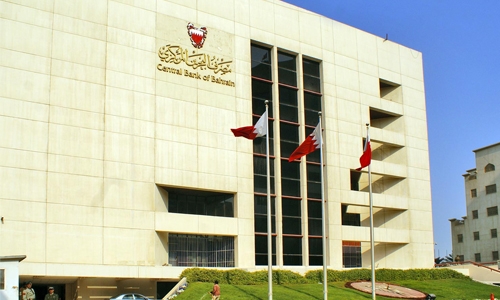
The study says that Islamic banks in Bahrain have loyal retail and corporate followers and have maintained a stable investment accounts and financings in the face of contraction in conventional banking. This helped Islamic banking to gain market share from conventional banking in recent years.
Bahrain’s Islamic Banking scene suffers from high relative cost base and lack of scale benefits, and thus requires consolidation to reduce cost base, the report notes.
It added that Bahrain is showing signs of recovery witnessing a slight increase of 1pc in their share of Islamic banking assets. Furthermore, it has maintained a stable investment accounts and financing assets. Growth in 2014 for total assets, financing assets and investment accounts exceeded CAGR (banking assets 4 pc, financing assets 5pc, investment accounts 6pc) over the past four years.
Globally, the report says, largest Islamic banks now have US$1 billion or more in shareholder equity, making them better positioned to lead the future regionalisation of the industry. In relative terms though, they are still one-third the size of their largest traditional peers in home markets, and also lag in terms of return on equity.
A more inclusive business strategy and digital-first approach can easily help close this gap, it
suggests.
Related Posts