

Mideast Youth is now ‘Majal’
Little do we know that a network of platforms, built for promoting social justice, is based and founded in the Kingdom and is spreading its wings regionally and internationally.
Successful Bahraini blogger and social activist Esra’a Al Shafei founded Mideast Youth 10 years ago. Mideast Youth is a network that helps amplify the stories and voices of underrepresented and marginalised communities throughout the Middle East, such as ethnic and religious minorities and the plight of migrant workers.
Al Shafei was inspired by the power and influence of the internet in terms of its global communication. She felt it was imperative to help build informed communities that celebrate and protect diversity, as well as to actively explore new and effective ways to promote and achieve social justice. Mideast Youth eventually became a home of a number of projects, creating many tools, apps, campaigns, websites and projects falling under the same umbrella, and each project serves the core mission of the organisation but with a different approach.
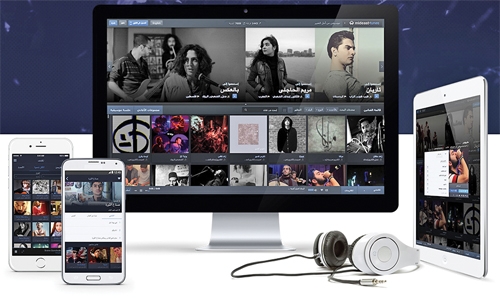
Several projects under Majal are Migrant Rights and Mideast Tunes, which has become the largest platform for independent musicians in the MENA region. They have recently launched Mideast Tunes Radio, which is a series of podcasts in Arabic that cover the intersection of alternative music and social, from the artists’ perspectives. They are also in the process of launching CrowdVoice.by, which was awarded a Knight Prototype Fund. This open source tool will help journalists and grass roots organisations curate and verify crowd-sourced information more efficiently.
As Mideast Youth has reached the end of a decade full of impact, credibility and innovation, they have reached beyond the region and scaled their projects broader with team members and initiatives in India, Mexico and a more global audience.
Mideast Youth is proudly rebranding its name to Majal.
When DT News spoke to Esra’a Al Shafei about the recent change, she explained: “We want the process of our rebranding as Majal to reflect our transnational positioning. Majal in Arabic means to ‘give way’, or an opportunity, and it has the same meaning in Farsi. In Hindi slang, it means daring or brave. When read in Spanish, it’s “Mahal,” which in Tagalog means love. So this word embodies everything we wish to express through our work, and it has the global presence which we seek.”
Mideast Youth has won many internationally recognitions, like Berkman Award from the Berkman Centre at Harvard Law School for “outstanding contributions to the internet and its impact on society,” ; Senior Fellowship from TED (2009-2013), one of Top 100 NGOs worldwide by the Global Journal magazine, listed on Forbes as one of “100 Most Creative People in Business,” received the 2014 Human Rights Tulip Award, a BOBs award for “Best in Online Activism,” and the Monaco Media Prize, which acknowledges innovative uses of media for the betterment of humanity.
With their music related platform, Mideast Tunes, some of their bands ended up on places like Radio Netherlands Worldwide and the frontpage of CNN.
Asked about peoples’ feedback on Majal’s projects, Esra’a said: “When people see Mideast Tunes and its apps, they’re shocked to learn it’s founded and based in Bahrain. People always think it’s some Dubai-based startup with venture capital and deep pockets, but the project was completely self-funded for many years. It helps people realise the drive and potential we have here that we need to continue to advance, build upon and improve even though unfortunately there’s not too much support for such initiatives. It’s important to keep working against these odds. It took three years of persistence, trials and errors before the work started generating interest on an international scale. It certainly wasn’t easy.”
Talking about the music scene in Bahrain and the region, she said “the scene has come a long way and it’s refreshing to see the increasing number of gigs and live performances. Just a few years ago in 2010, it was a completely different story. Fewer bands and performances were on the underground level, much smaller venues, lack of sponsorships, not enough attendees, and so on. Today, the progress is very visible. The help these bands give to each other in terms of production, facilities, or venues is also really inspiring. It shows that the only reason the scene has gotten this far is through collaboration, hard work, and deep respect for the long-term movement. Of all the Gulf countries, I think Bahrain by far has the healthiest and most active local scene that is encouraging more and more home-grown talents to actualise their hopes of having their music heard. We see this in the number of genres that we have represented in the scene now compared to just last year, and the list just keeps growing.”
Related Posts