

Gulf states confront Iran at UN over escalating attacks
Bahrain and UAE warn of threats to global trade and security after missile and drone strikes
TDT | Manama
Email : ashen@newsofbahrain.com
Bahrain and the United Arab Emirates strongly condemned Iran at the United Nations, accusing it of escalating attacks that threaten regional and global security, including strikes on civilian infrastructure and shipping routes.
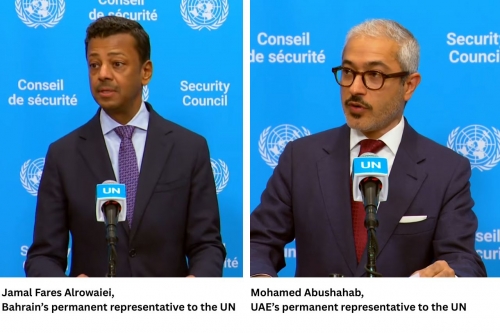
Speaking at a UN Security Council media stakeout, Jamal Fares Alrowaiei, Bahrain’s permanent representative, described the incidents as part of a “deliberate and escalating pattern of destabilising conduct” targeting the Gulf region.
He said attacks on the UAE represent “an immediate and serious collective concern” for Bahrain and the wider region, warning that continued strikes on civilian infrastructure and commercial vessels in the Strait of Hormuz pose a direct threat to international peace.
Alrowaiei added that the actions violate UN Security Council Resolution 2817 and demonstrate Iran’s continued non-compliance. He cited recent drone and missile attacks in Fujairah that caused civilian injuries and damaged critical energy facilities.
“The security of the region is indivisible,” he said, reaffirming Bahrain’s full solidarity with the UAE and calling for a “credible, united and decisive” response from the international community.
Addressing the same briefing, Mohamed Abushahab, the UAE’s permanent representative to the UN, said Iran had launched a large-scale attack on May 4 involving ballistic missiles, cruise missiles and drones.
According to Abushahab, UAE air defences intercepted most of the projectiles, but three civilians were injured and a fire broke out in the Fujairah oil industry zone.
“Targeting civilians and civilian infrastructure is not only unacceptable — it is unlawful,” he said.
The UAE envoy added that since February 28, the country has intercepted more than 500 ballistic missiles, nearly 30 cruise missiles and over 2,000 drones launched from Iran.
He also warned that attacks on commercial shipping in the Strait of Hormuz — one of the world’s most critical energy corridors — risk disrupting global markets.
“What happens in the Strait of Hormuz does not stay there,” Abushahab said, noting potential impacts on energy supplies, food prices and global economic stability.
He stressed that the issue extends beyond the region, calling it “a test of whether the international system can protect the basic conditions on which the global economy depends.”
The UAE condemned the attacks “in the strongest possible terms” and urged the Security Council to take decisive action, while affirming its right to self-defence under Article 51 of the UN Charter.
Related Posts