

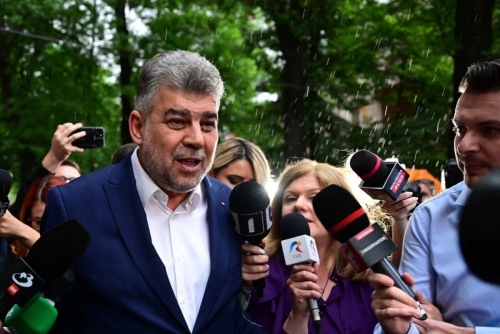
Romanian pro-EU PM faces no-confidence motion
Email:online@newsofbahrain.com
Bucharest: The collapse of the Romanian government marks a significant shift in the nation's political landscape, as Prime Minister Marcel Ciolacu’s pro-EU cabinet was toppled by a no-confidence motion on Monday.
The motion was driven by a coalition of opposition forces, primarily the nationalist AUR and the center-right USR, who capitalized on growing public and parliamentary dissatisfaction regarding the administration's fiscal strategies and judicial reforms. This legislative defeat effectively ended the tenure of a government that had been tasked with balancing domestic economic stability with the stringent requirements of the European Union.
Several critical factors converged to trigger this political downfall. Economically, the Ciolacu administration faced intense pressure over a widening budget deficit and the implementation of controversial tax hikes, which were widely viewed as a necessary but unpopular burden to secure EU recovery funds. Furthermore, deep-seated disputes over judicial appointments specifically for key anti-corruption posts strained the ruling coalition to its breaking point.
These internal fractures allowed the opposition to frame the government as ineffective, leading to a successful vote that highlights the rising influence of nationalist sentiments within the country.
The immediate aftermath of the vote leaves Romania in a state of constitutional transition. President Klaus Iohannis is now required to consult with the various parliamentary parties to appoint a new prime minister-elect.
The political stakes are high; if the parliament fails to approve two consecutive government proposals within a sixty-day window, early elections will be triggered. Until a new government is formed, Ciolacu’s cabinet will remain in a caretaker capacity with limited powers.
This period of uncertainty poses a risk to Romania’s international standing and the timely execution of its National Recovery and Resilience Plan, as EU officials look for stable leadership in Bucharest.
Photo Credits; AFP
Related Posts