

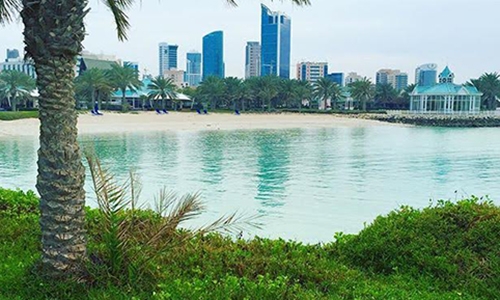
To conserve the blue, it’s time to think green
Manama:It’s surprising: there was a time when people would have ridiculed the very thought of water being more pricier than oil, and yet here is it, becoming the most debated topic of the century. The Gulf region, which is highly vulnerable to the threats of climate change and water scarcity, is already starting to feel the heat. Reports after reports emerge highlighting the environmental hazards that await in a gamble called future. The World Resources Institute (WRI) water-stress report has six GCC States in the top 10 most water-stressed countries in 2040. The UNDP Arab Human Development Report points out to the sub-Saharan region’s vulnerability to the risk of environmental changes, where adaptation strategies are not affordable by the poor population. It’s time the term ‘sustainability’ moves on from a theory to on-the-field implementation, with effective participation from all sections of the society. In this context, DT News contributor and Gulf University, Bahrain Interior Design Engineering student Balqees Akram Mohd talks to experts about sustainable designs suitable to the Kingdom and water conservation within green building in Bahrain. Excerpts from the interviews:
Embrace environment-friendly practices
Water Resources & Environmental Management (M.Sc.)
Nature Environmental Studies and Consultations W.L.L
Historically, prior to 1925, Bahrain’s population depended entirely on fresh water from naturally flowing springs (Mostly undersea springs) in addition to some hand-dug wells. Until the late 1970s, the country’s water demands were met entirely by groundwater from the Dammam aquifer.
Aiming to conserve the scarce water resources, the government directed its efforts toward development of non-conventional sources of water by constructing a desalination plant in 1974, in additional to a sewage treatment plant in the eighties to meet agricultural demands. However, the unlimited abstraction, with inadequate recharging resulted in the increased salinisation of groundwater and declining water levels, leading to the closure of some of the wells.
Now lets looks at water production in Bahrain: total desalinated water is 144.22 MIG/day and total groundwater production is 21.06 MIG/day, (2014,WEA).
A major factor that led to increase of water demand include limited freshwater resources, as the average rainfall is 72 mm/year.
Other factors include declining and salinisation of the groundwater and rapid population growth. (Bahrain is one of the most densely populated countries in the Middle East with a population of about 1.332 million)
Water resources in Bahrain and GCC countries are limited; therefore the development of water conservation in domestic sector (highly ranked water use by sector) must find environmentally friendly practices and alternatives. This includes the green buildings that take into account the water and power efficiency and conservation, indoor air quality, solid waste management and other factors.
One of the important points in water conservation is the behaviour of citizens and the environmental awareness level in local community.
Green buildings embrace creative alternatives, aesthetics, eco-friendliness and cost effectiveness in water conservation within building design, in addition to principles and practices for water efficiency in construction and operation of buildings.
Water conservation can be achieved during the building life cycle phases (planning and drawing, land preparation and construction, and the operation phase). In early phases of building development, (large scale building project) water consumption assessment and optimisation studies should be conducted.
Here is how indoor water use breaks down in both kitchen and bathroom: toilet 28 per cent, washing machines 22pc, shower and baths 19 pc, sinks 16pc, household leak 14pc.
Rainwater harvesting is a popular method for irrigation purpose and washing of surrounded area (e.g. garden path). It is the collecting, storing, and using of rainwater for landscape irrigation and other uses. The main benefit of rainwater harvesting is that it reduces the dependency on municipality water. The rainwater is collected from various hard surfaces such as rooftops.
This can be harvested and used by the green buildings designed for this purpose, with pipes with adequate slope and then discharging in storage tank on ground surface. The rainwater can also flow by main pipes connected with an irrigation network system directly, with mechanisms to avoid evaporation of water in pipes or storage tank. However the rainwater harvesting is useless in Bahrain.
Use of eco-friendly modern irrigation systems and techniques can be most useful for water conservation in irrigation of garden. I would like to indicate that the selection of irrigation methods and system would depend on type of plants or vegetables. The drip irrigation system is eco-friendly and almost preferred in gardens. According to this, apply water slowly and directly to the root zone or the base of plant.
There are many benefits of using drip irrigation designs over sprinkler irrigation designs in gardens, including reduced amount of water lost over spraying, reduced water lost to evaporations, eliminated runoff on paved areas, window and walls. In short, water efficiency rates are as high as 90pc. The type of drip irrigation system installed needs to meet the needs of the plants, plant locations, soil types and site conditions.
It is worth mentioning that the neighbouring countries in Gulf Cooperation Council (GCC) have exceeded advanced phases in the development of Environmental policies and regulations that encourage the implementation of green buildings and strengthening the role of local environmental performance.
National government agencies, NGOs, Private-sector and local community should stand together and join hands to improve water sector trends within green building design, principles and practices.
The government’s approach to raise tariff of water consumption does not achieve the sustainable development and environmental conservation.
Ways to save water in large scale buildings
By Ashutosh Jha
Senior Architect with more than 19 years of experience and also a LEED Accredited Professional and working in Kingdom of Bahrain for last two years
Water management remains a serious economic and environmental issue throughout the region. Over-consumption of water is a serious issue.
I would like to highlight two methods, which can be key for water conservation in large-scale buildings and developments.
It’s very important to use low flow fixtures in toilets. This method is especially beneficial for large scale or tall buildings. Low flow water fixtures are sink faucets, shower heads, and toilets that use less water per minute than traditional models. Low-flow water fixtures conserve water by using a high-pressure technique to produce a strong or equal flow of water, with less water than other less-efficient fixtures.
Condensate produced from air conditioning equipment can be recovered and reused within the building. The condensate can be collected by installing a collection pan and then transferring it to different systems through drainage pipes for various reuse purposes such as irrigation, toilet flushing, or other onsite purposes, where it will not come in contact with the human body.
For buildings with a cooling load equal to or greater than 350 kilowatt, a large volume of condensate can be recovered and reused.
Smart techniques available
Bahraini Freelance Interior Designer
High water consumption rate is a global problem, but the situation in Bahrain is miserable. Electricity and Water Authority statistics show up to an increase of 10 million imperial gallons of water in daily consumption in the same periods in 2015 over 2014. Also a study shows that the daily per capita consumption in Bahrain is on par with the highest in the world.
So we have to find some smart techniques to conserve water in all facilities.
Instead of dreading your water usage each month, take advantage of smart water fixtures that use less water but have larger water droplets. The Delta Brizo brand faucets that sculpt the water into a unique wave pattern, creates the feeling of more water.
Other faucets can turn on and off automatically by motion and the temperature. These smart technologies ensure a better user experience with less water.
Install a low-flow showerhead. It may cost you some money up front, but your water conservation efforts will save you money in the long run. Conventional showerheads flow at 5 gallons per minute or more, whereas low-flow showerheads typically flow at 2.5 gallons per minute (or less!).
Get a low-flow toilet. Flushing is the biggest water hog in the house. Older, conventional toilets can use 5 to 7 gallons per flush, but low-flow models use as little as 1.6 gallons.
Since an average person flushes five times a day, the gallons can really add up.
Install low-flow faucet aerators in your sinks - you can save gallons of water each time you use the tap. Conventional faucets flow as high as 3 gallons per minute, but low-flow faucets flow at 1.5 gallons per minute, Also, using a Sprayer Kitchen Faucet will decrease the amount of water usage for washing vegetables and fruits.
Spend less time in the shower. Also using sprayer instead of buckets for cleaning saves a lot of water.
Irrigation is the primary consumer of water on earth, so use modern Drip irrigation techniques to conserve water in gardens.
Drip irrigation saves water and fertilizer by allowing water to drip slowly to the roots of different plants, either onto the soil surface or directly onto the root zone, through a network of valves, pipes, tubing, and emitters. It is done through narrow tubes that deliver water directly to the base of the plant.
Finally, the individual’s awareness in the use of water is the basis for water conservation.

Always avoid high-consumption elements
By Dr Ghaleb Khadem
Bahrain Architect and Interior designer
Water conservation can be achieved by employing better measures of water consumption.
The consumption of water in houses is most in bathrooms, gardens and kitchens. Therefore using water saver equipment could save a huge amount of water.
Avoiding the high- consumption element like bath tub, swimming pools, waterfalls and water fountains can also help in this.
Fabric and other similar materials, which need continuous washing, contributes a lot to wastage of water. Therefore it is essential to keep in mind the materials that we use, if we are serious about water conservation.
Related Posts