

Is your bank cheating you?
Manama: Customers, beware! Your bank may be cheating you. Many banks in Bahrain are not following fair practices, while dealing with their customers, it has emerged.
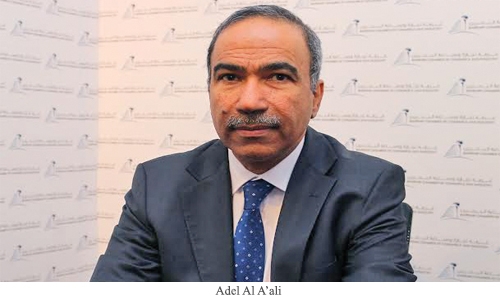
The unfair practices are not detected by customers due to their lack of awareness, Adel Al A’ali, Head of the insurance and banks sector committee and board member of the Bahrain Chamber of Commerce and Industry (BCCI), said.
He was explaining to DT News regarding the BCCI Insurance & Banks committee’s recent statement expressing reservations on some terms and conditions applied by a number of banks in Bahrain, calling them biased and groundless.
The committee consisting of Dr. Osama Al Baharna – Committee Vice Chairman, Sameer Al Wazzan – CEO of BNI, Yehyia Nouurdin – CEO of Tazur, Younis Jamal – CEO of Takaful, Osama Al Khaja – from KFH, Faisal Al Alwan – ex banker, Rashid AbdulRahim, and Fouad Able – Committee Consultant, in a strongly worded statement last week had decried the unfair practices followed by a number of banks in Bahrain through which customers, both corporate and individuals, are made victims of lengthy terms and conditions imposed on them.
The BCCI committee had earlier approached Central Bank of Bahrain (CBB) with the details regarding the malpractices and had received an assurance that the matter will be taken up with urgency, Al A’ali said.
“For example, when some banks send customers their account statement, it contains a condition, which stipulates that if the customer doesn’t agree with the statement, he or she has to inform the bank within 15 days. But, errors, which are against the customer will only have that condition applied; if the bank is the loser, the condition will never be applied and the bank can rectify error any time they like. Thus, it is an unfair agreement,” he said.
“We have told CBB about the banks following this policy,” he added.
He says such unfair conditions are present in most of the forms signed by bank customers.
Other practices of rip-off are taking fees for three months on different services, mostly availed by corporate clients, even when the client needs the service only for a week or two. Also, facilities, which require heavy fees in the first year, even when automatically renewed annually, the banks insist on taking all charges as in the first year, he added. The unfairness is heightened by the fact that customers are not given a choice to choose for a five-year service, and long-term customers are forced to pay fees every year.
“Even the CBB was surprised when we told them about this,” Al A’ali said.
Before 2008 global financial crisis, the main source of income for banks was the difference earned between deposits and loans, but after that, it diminished and banks were forced to introduce fees for various services. “Practices like requiring 150 fils for every cheque are abnormal,”
Al A’ali stated.
“Professionals and entrepreneurs with thorough knowledge about such practices can fight with such banks, but what about the common man and small firms,” he asked.
“When a person approaches banks for loans, for example car loan, banks may say pay only 150 dinar a month. But, what goes behind that calculation is not transparent. After paying 150 dinars for various months, is the customer still paying interest for the original full amount or is it reduced for the amount paid? When banks are asked about this, they will show the agreements signed by the customers. And the customers will not get a loan without signing the papers given by the bank,” he said.
Reforms and better practices should be brought in by CBB regarding banking sector’s interaction with customers, he suggested.
When customers approach banks for loans, to start a business, banks usually promote personal loan so that banks are safe, as personal assets can be attached in case of a default. When such loans are issued the collateral provided may be worth many times more than the loan amount taken, but the businessperson may not be allowed to take a second loan from the same bank or another bank. Also, in case of a default, the business person is not given fair alternatives and the collaterals are pushed to auction. This process is very discouraging for the entrepreneurs, as the system tends to brand them as “failed customer” even with a default of only few months.
“Even bank employees are not aware of the fine print; many were surprised when we pointed out the unfairness to them,” he said.
BCCI Insurance and Banks committee head said they want the Central Bank to initiate a committee or department to supervise these practices. They have to inspect the customer interactions of banks, including checking the fine print of documents distributed to customers, conduct reviews of various fees, and educate customers.
Related Posts