

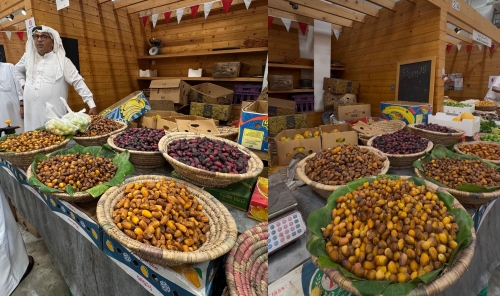
From palm to plate - Bahrain’s rutab season begins
Bahrain’s rutab markets are beginning to fill as the summer heat settles in, with early local varieties opening a season that arrives in stages rather than all at once.
A tour by The Daily Tribune found active buying at local markets, where consumers chose from the first fresh batches of Bahraini rutab amid prices that varied according to variety, timing and supply.
Vendors said early types such as Mawaji, Tayyar and Ghurra are now available, while popular varieties including Khalas and Khunaizi are expected to arrive in larger quantities later in the season.
Bahraini heritage enthusiast Hasan Al Majed said the rutab season is part of a wider agricultural rhythm tied to the life of the palm tree.
He said rutab is not only a taste, but a story of a palm tree and years of patience.
According to Mr Al Majed, the season in Bahrain usually runs from July through August, although early varieties begin appearing before the peak.
Al Majed explained that the fruit passes through several traditional stages before becoming dates. It begins with Hababou, a small green fruit, before moving to Sheesa, a longer and thinner early stage. It then reaches Khalal, when ripening begins, followed by Biser, the stage before full softening.

Rutab
Rutab is the best-known stage in Bahrain, he said. At this point, the fruit becomes soft, juicy and sweet, making it one of the most popular seasonal foods. The final stage is Tamr, when the fruit becomes dry or semi-dry and suitable for storage over longer periods.
Seller Abdulshaheed Al Shamtout said Bahrain’s rutab season does not begin with all varieties appearing together.
Mawaji is among the first to open the season, followed by types such as Tayyar, Bajairat, Ghurra, Nasiri and Khudairi.
He said more varieties, including Barhi, Hilali, Shishi, and Salmi, will appear as the season progresses. Al Shamtout said Bahrain has more than 72 local rutab varieties.
They differ in colour, size, taste and ripening time, giving the season both length and variety.
He said the season usually begins in the final part of June and continues until around mid-September, with peak availability from July to mid-August.
Seller Habib Al Baqali said Mawaji began appearing in markets around three weeks ago, followed by Bajairat and Tayyar.
He said Ghurra is currently among the most in-demand varieties, selling for about BD2.5 per kilogramme. Bajairat sells for about BD1.5, while Mawaji ranges between BD1 and BD1.5 per kilogramme.
Al Baqali said Tayyar gets its name from its short season and how quickly it disappears from markets. He added that Bajairat is known as an early ripening variety, recognised by its yellow colour at the start of the season. He said Khalas and Khunaizi remain among the most awaited varieties for consumers, but their arrival depends on their natural ripening time.
Related Posts