

From Pearl Trade to Living Memory
When Manama Souq Was the Beating Heart of Bahrain
TDT | Manama
Email: mail@newsofbahrain.com
Before modern shopping malls reshaped Bahrain’s retail landscape, Manama Souq stood as the Kingdom’s main commercial hub, where trade, culture, and daily life converged. Today, Bahraini businessman Nabeel Ajoor, born in 1961, is calling for the preservation of the souq’s rich memory, drawing on his family's long connection to its textile trade dating back to 1932.
The story highlights the cultural and economic importance of Manama Souq, not only as a historic marketplace but also as a symbol of Bahrain’s identity. Through personal memories and historical accounts, Nabeel Ajoor reflects on how the souq shaped generations of merchants, workers, and families, and why documenting its heritage is essential as the area continues to evolve.
Nabeel Ajoor, who chose to continue his family’s textile business instead of pursuing studies abroad, is a partner in “Abdulrahman and Ibrahim Mohammed Ajoor & Partners,” a company deeply rooted in the commercial history of Manama Souq.
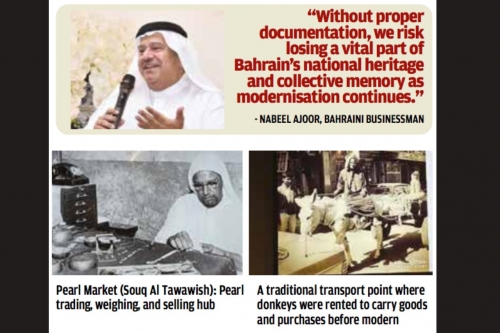
He recalls the souq’s most iconic sector, the pearl market known as “Souq Al Tawawish,” where pearls were displayed in small elevated shops, laid out on fine carpets and red or velvet-covered tables. The space was carefully organised for sorting, weighing, and selling pearls, reflecting the precision and value of Bahrain’s historic pearl trade.
Another important part of the marketplace was (Wednesday Market), which played a vital social and economic role, particularly for Bahraini women. During the months when pearl divers were away at sea, women became the backbone of household income, selling goods such as perfumes, handmade crafts, clothing, sewing products, and cosmetics.
Women would set up their stalls early in the morning and continue selling until the afternoon, demonstrating resilience, independence, and economic contribution at a time when family survival often depended on their efforts.
The souq also included early transport services such as donkey rentals, which were used to carry goods and purchases home before the arrival of modern transport systems such as trucks and buses.
Beyond these well-known sections, Manama Souq was also a marketplace for almost everything, with dedicated areas for textiles, gold, and traditional goods. One of the most distinctive sections was Souq Al Safafir, known for copper craftsmen who produced traditional cooking pots and utensils, reflecting the diversity of trades that once defined the souq’s economic life.
Nabeel Ajoor emphasizes that Manama Souq was more than a marketplace. It was a space of coexistence where different communities, professions, and cultures interacted daily, shaping Bahrain’s long-standing values of tolerance and social unity. His family business, established in 1932, remains part of this commercial heritage and reflects the continuity of trade across generations.
As Manama continues to modernise, Nabeel Ajoor stresses that preserving the souq’s stories is just as important as protecting its physical structures. He warns that without proper documentation, an essential part of Bahrain’s national identity and collective memory could gradually fade away.
Related Posts