

Shura to Vote on Prison and Inmate Work Law Changes
TDT | Manama
Email: mail@newsofbahrain.com
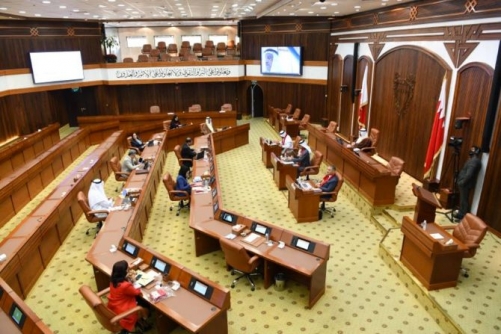
Two draft laws replacing references to prison and inmate work with reform, rehabilitation and training terms will go before the Shura Council on Sunday. This move is meant to address remarks from the International Labour Organisation regarding wording that could be read as allowing forced labour alongside jail terms.
The first bill would amend parts of the Penal Code issued by Decree-Law No. 15 of 1976 and attached to Decree No. 68 of 2025. The second would amend parts of the Reform and Rehabilitation Institution Law issued by Law No. 18 of 2014 and attached to Decree No. 69 of 2025. In both reports, the Shura Council’s Foreign Affairs, Defence and National Security Committee recommended passage in principle after studying the lower chamber’s decision, the attached papers, the opinion of the Legislative and Legal Affairs Committee, and legal notes prepared for it.
In the Penal Code bill, Article 55 would be replaced in full. Article 210 would also change so that the phrase ‘in prison’ becomes ‘in a reformation and rehabilitation centre’, while the word ‘prisons’ would change to ‘reformation and rehabilitation centres’ wherever it appears in the same law. The third article deals with implementation.
The committee said the bill came in reply to remarks made by the ILO and its Committee of Experts on the Application of Conventions and Recommendations regarding legal texts that might be understood as allowing compulsory work alongside a jail sentence. It said Bahraini law does not take that line, but the wording should change so the meaning is plain.
It said the new text for Article 55 would shift the focus from requiring a convicted person to carry out work inside prison to placing that person in rehabilitation and training programmes inside reform and rehabilitation centres. In the committee’s view, that ties punishment more clearly to correction and return to society, while removing any reading that may suggest forced labour.
The report also said the wording change in Article 210 and across the Penal Code would align the law with the terms already used in the 2014 Reform and Rehabilitation Institution Law. That, it said, would unify the language used in the two laws and match the shift from the old prison-based wording to one built around reform and rehabilitation.
Shura will also take up the second bill on Sunday, this time dealing with the Reform and Rehabilitation Institution Law itself. That draft law also has three articles. Article 1 would replace the text of Article 18. Article 2 would make wider wording changes throughout the law, changing terms linked to work and employment to terms centred on rehabilitation and training. The third article deals with implementation.
Under those changes, the title of Chapter Two of Part Two would replace ‘employment’ with ‘rehabilitation and training’. The phrase ‘from work’ in Articles 19 and 31 would become ‘from rehabilitation and training’. The word ‘employment’ in Article 20 would also be replaced with ‘rehabilitation and training’, while ‘work reward’ in Articles 21 and 22 would become ‘rehabilitation and training reward’.
The committee said this bill, too, came from ILO remarks on wording that could be misunderstood as allowing compulsory labour as part of a custodial sentence. It said the aim was to move the law away from an employment-based reading toward one that clearly shows training, skill-building and preparation for return to society.
It added that Bahrain’s reformation and rehabilitation centres now work through organised education and training programmes, along with health and social care, in a rights-based setting meant to improve the chances of reintegration. The bill, it said, would give that approach clearer legal wording.
The committee said the change to Article 18 mattered in particular because it would replace the word ‘work’ with ‘rehabilitation and training’, replace ‘types of work’ with ‘rehabilitation and training programmes’, and replace ‘wage’ with ‘reward’. In its reading, that moves the duty placed on inmates from a work-based frame to a rehabilitative one, while removing wording that could be taken to imply compulsory labour.
After reviewing both bills and the views put by members, the committee ended by recommending approval in principle and passage of the draft articles in the form shown in the attached tables.
Related Posts