

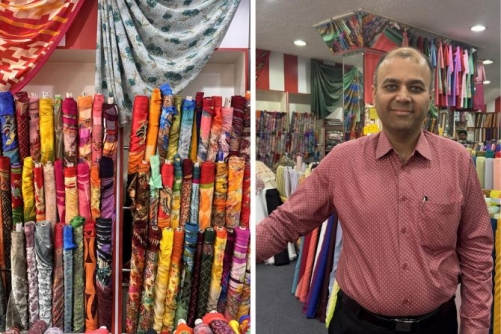
Textile Market Hit by Fabric Shortages and Shipping Delays Shop owners report fewer customers
TDT | Manama
Email: mail@newsofbahrain.com
Textile market is facing disruption as delayed fabric shipments impact availability and customer demand. Materials that once arrived every 10 to 20 days are now taking up to one to one and a half months, creating challenges for local businesses.
The slowdown reflects broader global shipping challenges, with local shop owners experiencing reduced customer turnout and limited stock. The situation affects daily operations and raises concerns about the market’s short-term future.
“Compared to last year, sales are about 50% lower. Before Ramadan, we had some customers, but it is not the same as before,” said Vijay Shevkani, manager of Vanita, who has been working in the fabric market for more than 30 years.
Challenges
In an exclusive interview with The Daily Tribune, Shevkani highlighted the growing challenges facing the sector, noting that customer behavior has shifted significantly.
“Customers are not taking any new material. They only come for special needs, sometimes asking for just half a meter or one meter of lining,” he said.
“Our fabrics come from India, China, and Indonesia. The main port is in Dubai, and from there the shipment comes to Bahrain,” he noted.
Delays
Shipping delays have worsened in recent months.
“The fabric takes time to arrive now about one month because once the truck is full, they send it. Before, we were receiving our materials every 10 days. Now it takes one to one and a half months,” he said. “Since the beginning of this unstable period, we have received only one or two shipments.”
Sales have been heavily affected, particularly during Ramadan. “From the beginning of Ramadan, sales have dropped. Even regular clients are coming less frequently,” he added.
Change
“There is no change in prices. We can’t increase them yet, though in the future they might rise if shipping takes longer or fuel prices go up,” Shevkani said.
The delays come amid wider global shipping disruptions, impacting not only the textile sector but also other industries dependent on imports. Many businesses are now adjusting by limiting stock and focusing on essential customer needs. While the market continues to face uncertainty, Shevkani remains cautiously optimistic. “We will not close. Day by day it is getting a little better. We hope customers will come back as the situation improves,” he said.
Related Posts