

Fish Ban Begins as Families Rush to Save a Taste
TDT | Manama
Email: mail@newsofbahrain.com
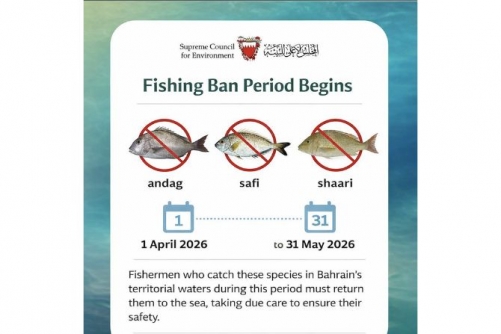
A quiet urgency has begun to ripple through Bahrain’s fish markets, as the Supreme Council for Environment confirmed that the annual ban on catching shaari, safi and andag fish will take effect from April 1 until May 31, 2026.
Season
The decision, issued under Resolution No. 2 of 2024, is part of a wider national effort to protect marine wealth, restore ecological balance and ensure that Bahrain’s waters continue to provide for future generations. For many, however, the announcement is not just about policy. It is about tradition, memory and the familiar taste of meals that bring families together.
The Daily Tribune observed a noticeable rise in demand in recent days, particularly for safi, widely regarded as a favourite among Bahraini households. Shoppers moved quickly through markets, selecting fresh catches with a clear purpose to freeze them ahead of the ban so they can continue enjoying them over the coming weeks.
For some families, this yearly ritual has become part of the season itself، a quiet preparation that reflects both love for local flavours and respect for the sea that provides them.
Balance
The council stressed that fishing these species will be prohibited in Bahrain’s territorial waters during April and May each year. Fishermen who accidentally catch them during the ban must release them back into the sea with care to ensure their survival.
Officials emphasised that such measures are essential to rehabilitate marine ecosystems, increase fish stocks and maintain biodiversity in local waters. The long term aim is not only environmental protection but also ensuring these fish remain available in local markets for years to come.
Beyond regulations, the council called for stronger public cooperation, describing fishing practices as a shared national responsibility. The impact, it noted, extends far beyond the sea, touching livelihoods, markets and dining tables across the Kingdom.
In Bahrain, where food is deeply tied to identity and community, the temporary absence of certain fish is felt not just in markets, but in homes. Yet, in that absence lies a collective understanding that protecting today’s catch is the only way to secure tomorrow’s.
Related Posts