

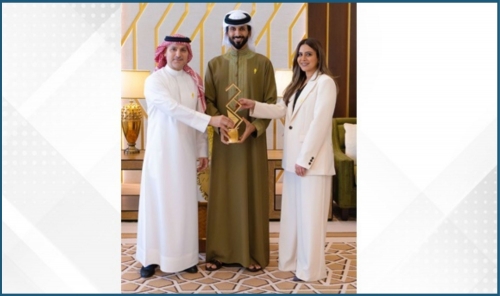
King Hamad Award Empowers Youth Worldwide to Lead Change
The King Hamad Youth Empowerment Award for Achieving the Sustainable Development Goals has emerged as a pioneering initiative in the Kingdom of Bahrain, reflecting the visionary guidance of His Majesty King Hamad bin Isa Al Khalifa and the directives of His Royal Highness Crown Prince Salman bin Hamad Al Khalifa, aimed at investing in youth and enabling them as active partners in sustainable development.
The award enjoys strong support from His Highness Sheikh Nasser bin Hamad Al Khalifa, Representative of the King for Humanitarian Work and Youth Affairs, who plays a key role in promoting youth contributions to international priorities and the Sustainable Development Goals, strengthening Bahrain’s position as a regional and global model in youth empowerment.
Since its inception, the award has become an international platform celebrating innovative youth initiatives that contribute to sustainable development. It provides young people worldwide with opportunities to transform their ideas into impactful projects within a competitive environment that fosters creativity, supports practical solutions, and opens avenues for partnerships and expansion.
Participants and winners of the fifth edition of the award emphasized that the experience goes beyond recognition, serving as an inspiring professional and personal milestone that reflects global confidence in youth capabilities and provides strong motivation to continue their development paths with ambition and determination.
Participants expressed pride in being associated with a global award bearing the name of His Majesty the King, highlighting its role in uniting youth efforts to support the future of nations worldwide.
At the national level, Abdullah Buhwa, CEO of Bahrain Commercial Facilities Company and recipient of the institutional award, stated that winning the King Hamad Youth Empowerment Award is a great honor reflecting the company’s commitment to placing Bahraini youth at the heart of sustainable development. He emphasized that youth empowerment is a strategic investment in human capital and a cornerstone of supporting Bahrain’s Economic Vision 2030, through structured training programs, mentorship initiatives, and leadership opportunities that prepare national talent to lead the financial services sector while promoting innovation and economic diversification.
In the financial category, Taron Joshi, CEO of the Ashraya Foundation for Children in India, described the award as a pivotal moment affirming the central role of youth as change-makers in sustainable development. He highlighted that the recognition strengthens the foundation’s commitment to empowering youth from marginalized communities through quality education, healthcare, mental health support, and sustainable livelihoods, underlining youth empowerment as essential for long-term social impact.
In the technology and digital category, Dr. Shabeeb bin Suleiman Al-Rashdi, Senior Lecturer and Director of the Center of Excellence for Environmental Technologies and Sciences at the National University of Science and Technology, said the university’s win reflects international recognition of a scientific and applied path led by the center. The initiative, which converts agricultural waste into valuable resources such as biochar and renewable energy, has trained and empowered over 250 young men and women in climate work, waste management, and clean energy, enhancing the university’s role as a national hub for research and innovation.
From Pakistan, Zain Ali Siddiqui, winner of the “Planet” award, noted that the recognition was a transformative moment for his project “GreenCity-AI,” which uses artificial intelligence for energy prediction and smart energy management. The award opened new opportunities for collaboration, infrastructure improvement, and the expansion of sustainable solutions that support clean energy, reduce carbon emissions, and build smarter cities.
In Benin, Angé-Marie Nicodème Issi, recipient of the Peace Award, expressed pride in winning, emphasizing the award’s reflection of collective effort and commitment to youth and local communities. She noted that it strengthens her belief in inclusive, community-driven leadership and supports the “Health Access Initiative” in combating violence and empowering youth, contributing to fairer, more peaceful societies and the achievement of the 2030 goals.
From Tanzania, Oliver Mwalongo, winner of the Peoples Award, highlighted the deep significance of the recognition, given the climate-affected realities of her community. Her initiative focuses on establishing climate-resilient, data-driven food gardens in collaboration with families to ensure healthy nutrition for children during their first 1,000 days.
Finally, Jean-Pierre from Mauritius, winner of the Prosperity Award, expressed pride in his achievement, stating that it motivates him to continue his work on governance and climate issues. He emphasized that youth, even from small island nations, can contribute to global solutions, and the award reflects international confidence in the role of young people in leading change.
Related Posts