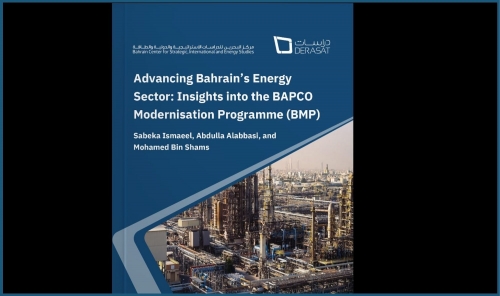
A scientific study by the Bahrain Center for Strategic, International and Energy Studies (Derasat) has confirmed that the Bapco Modernization Project is a major milestone in Bahrain’s industrial development. The study said the project reflects the Kingdom’s leadership vision to build a modern economy based on efficiency, innovation, and sustainability.
The study was prepared by a research team from Derasat, led by Dr. Abdulla Isa Al Abbasi, Director of the Energy and Environment Studies Program, along with engineer Sabeka Khalid Ismaeel, Assistant Analyst. The research also included Associate Professor Dr. Mohammed Ali bin Shams from the University of Bahrain.
According to the study, the Bapco Modernization Program (BMP) is the largest industrial investment in Bahrain’s history, with a value of USD 7.3 billion. The project supports Bahrain Vision 2030 by improving production efficiency, increasing value-added output, and reducing environmental impact through modern technologies.
The study explained that the project significantly increased refining capacity from 267,000 barrels per day to about 380,000 barrels per day, reaching 405,000 barrels per day one year after operations began. It introduced advanced refining systems that allow the production of cleaner, high-quality fuels, lower emissions, and better use of resources. The project also improved operational flexibility, enabling the refinery to process different types of crude oil based on global market demand.
The study highlighted that digital transformation and artificial intelligence now play a key role in refinery operations. Technologies such as sensors and predictive analytics help detect problems early, reduce losses, and improve energy efficiency, strengthening long-term sustainability and competitiveness.
In addition, the study noted the project’s indirect economic impact by supporting sectors such as transport, energy, and services. It also contributes to Bahrain’s goal of achieving carbon neutrality by 2060. The study predicted higher economic returns in the future through stronger integration between refining and petrochemical industries, especially after naphtha production increased by more than 110 percent.
The study concluded that the success of the Bapco Modernization Project marks a new phase for Bahrain’s energy policies. It recommended focusing on three key areas: expanding petrochemical industries, increasing the use of digital and AI technologies, and continuing investment in human capital through training and research partnerships.